ragnar digital collection · 作品展 exhibit of works

computer technique group コンピュータ・テクニック・グループ

tokyo 1966–1969
exemplary works and materials from the pioneering group of computer art
3D walkthrough →

Landmark works

Key CTG works not in the collection.

No. A

Random Walk Kennedy 1967
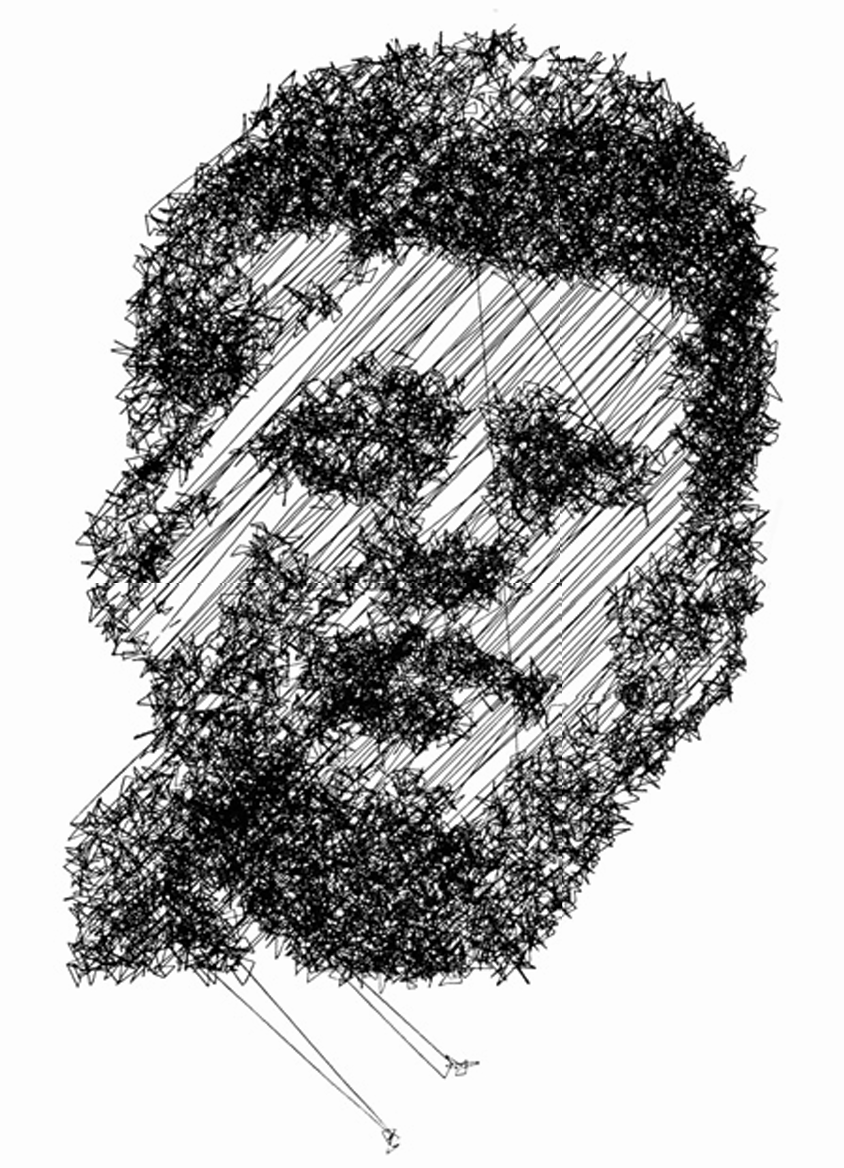
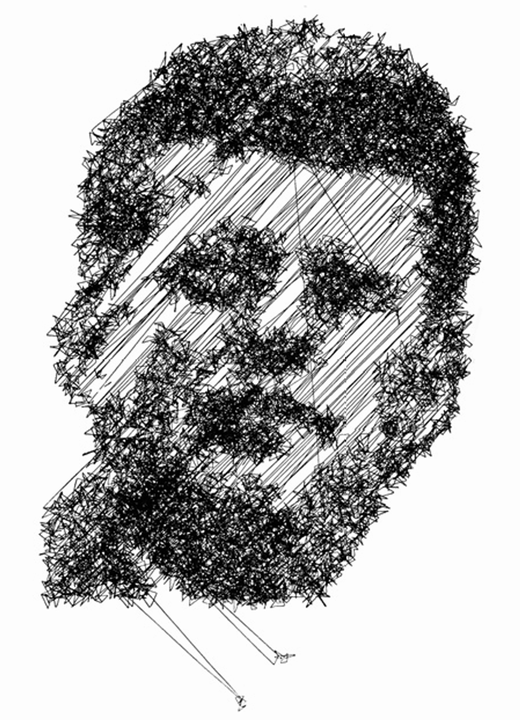
Random Walk Kennedy—a Kennedy portrait drawn as a dense random-walk scribble
Program
Haruki Tsuchiya
Shown
The First Computer Art Contest, Tokyo, March 1968; Trends in Contemporary Art, National Museum of Modern Art, Kyoto, 1968; Tokyo Gallery, 1968; Arte y Cibernética, Buenos Aires, 1969 (as Random Kennedy); Possible Futures, ICC Tokyo, 2005

Among the first of the Kennedy portraits. This work uses the same Kennedy dataset as Cube Kennedy (No. 1). In this work, the program generates ten additional points by random number around each data point then draws them in the order generated. This creates a “random walk.” The program then continues to the next point. The two dots below the chin and three diagonal lines running from the forehead were produced by an error in the data.
No. B

Kennedy in a Dog 1968

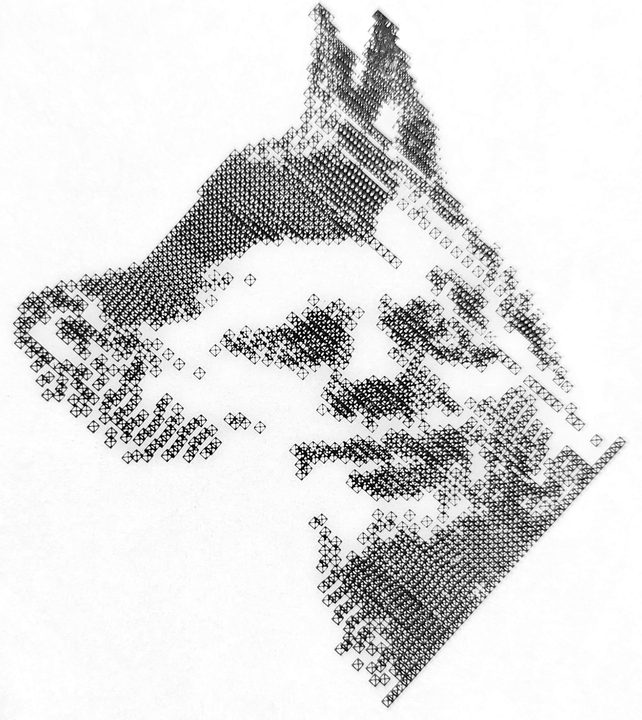
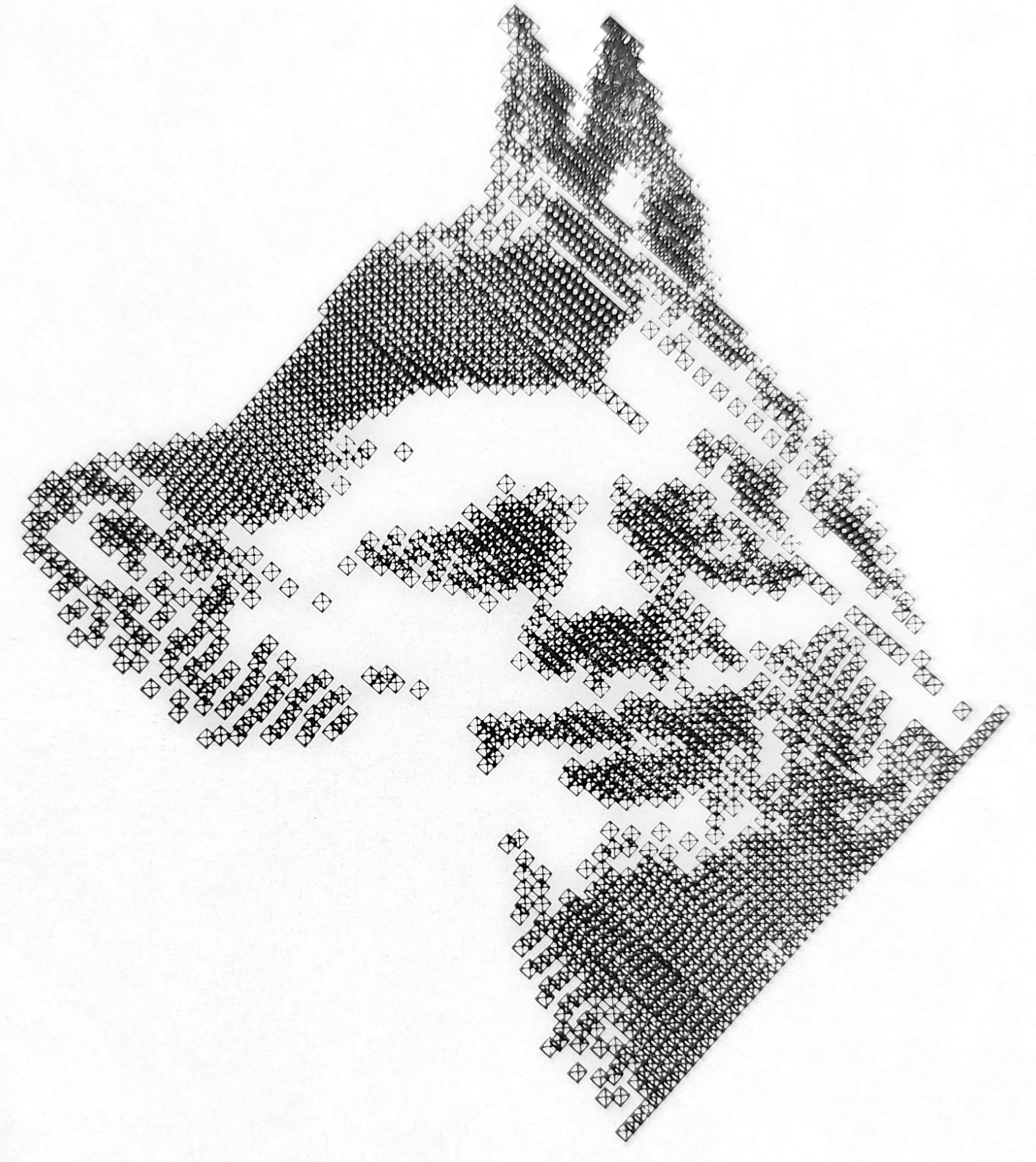
Kennedy in a Dog—the Kennedy portrait data fitted into the outline of a dog's head, drawn as small square loops
Idea
Masao Kohmura
Program
Fujio Niwa
Shown
Cybernetic Serendipity, ICA, London, 1968 (cat. no. 6); Trends in Contemporary Art, National Museum of Modern Art, Kyoto, 1968; Tokyo Gallery, 1968; Arte y Cibernética, Buenos Aires, 1969, and its South American tour; Computerkunst, Hannover, 1969, and Impulse Computerkunst, Munich, 1970; Computer Art, National Gallery of Modern Art, New Delhi, 1972; Possible Futures, ICC Tokyo, 2005

The data of the Kennedy photograph is inserted into the photograph of a dog, so that the portrait comes out in the shape of a dog’s head. Kōhei Sugiura, reproducing the work in Kōgei News in 1968, described the method as a figure read in on a rectangular grid is converted to a dog’s-head grid, and each element is drawn as a square loop whose size is set by random number.

No. C

Monroe in the Net 1968

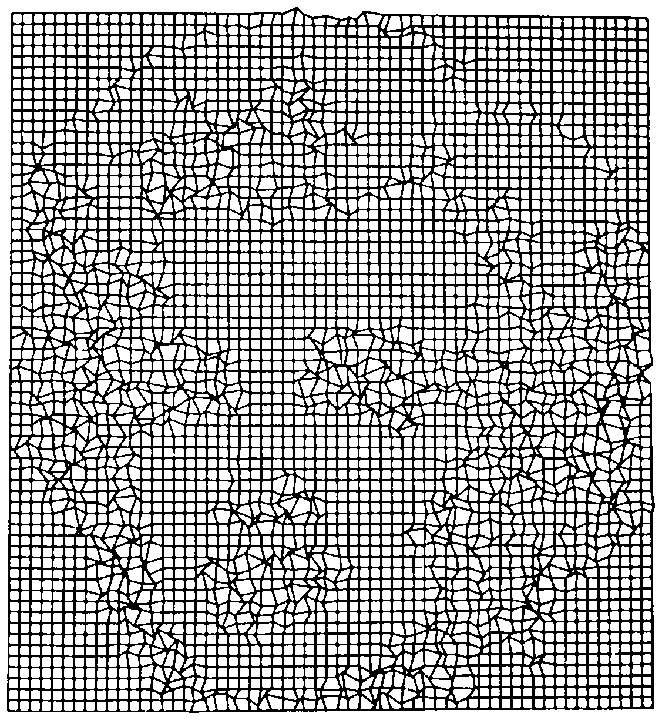
Monroe in the Net—a regular grid deformed by random numbers into a Marilyn Monroe portrait
Idea and program
Haruki Tsuchiya
Shown
Cybernetic Serendipity, ICA London, 1968 (cat. 7, as a plotter drawing); Tokyo Gallery, 1968; Arte y Cibernética, Buenos Aires, 1969, and its South American tour; Computerkunst, Hannover, 1969, and the German touring set that followed

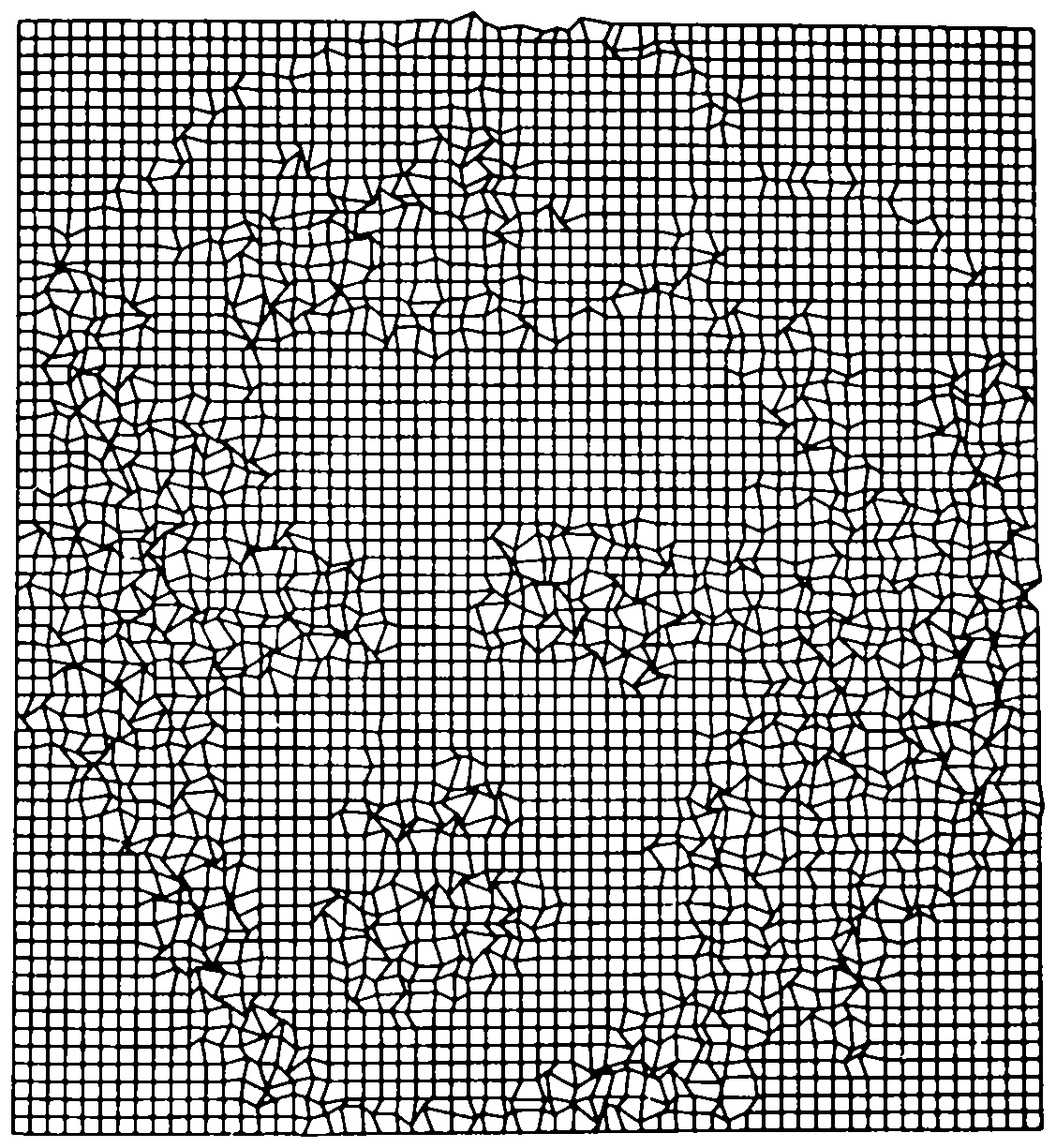
The same deformation effect of Kennedy in the Net (No. 2) is here applied to Marilyn Monroe: random numbers displace the intersections of a regular grid based upon a portrait. The dot data was taken from Andy Warhol’s Marilyn. The same data underlies Computer Monroe and was animated in the group’s 1969 film.

No. D

Deformation of Sharaku 1968

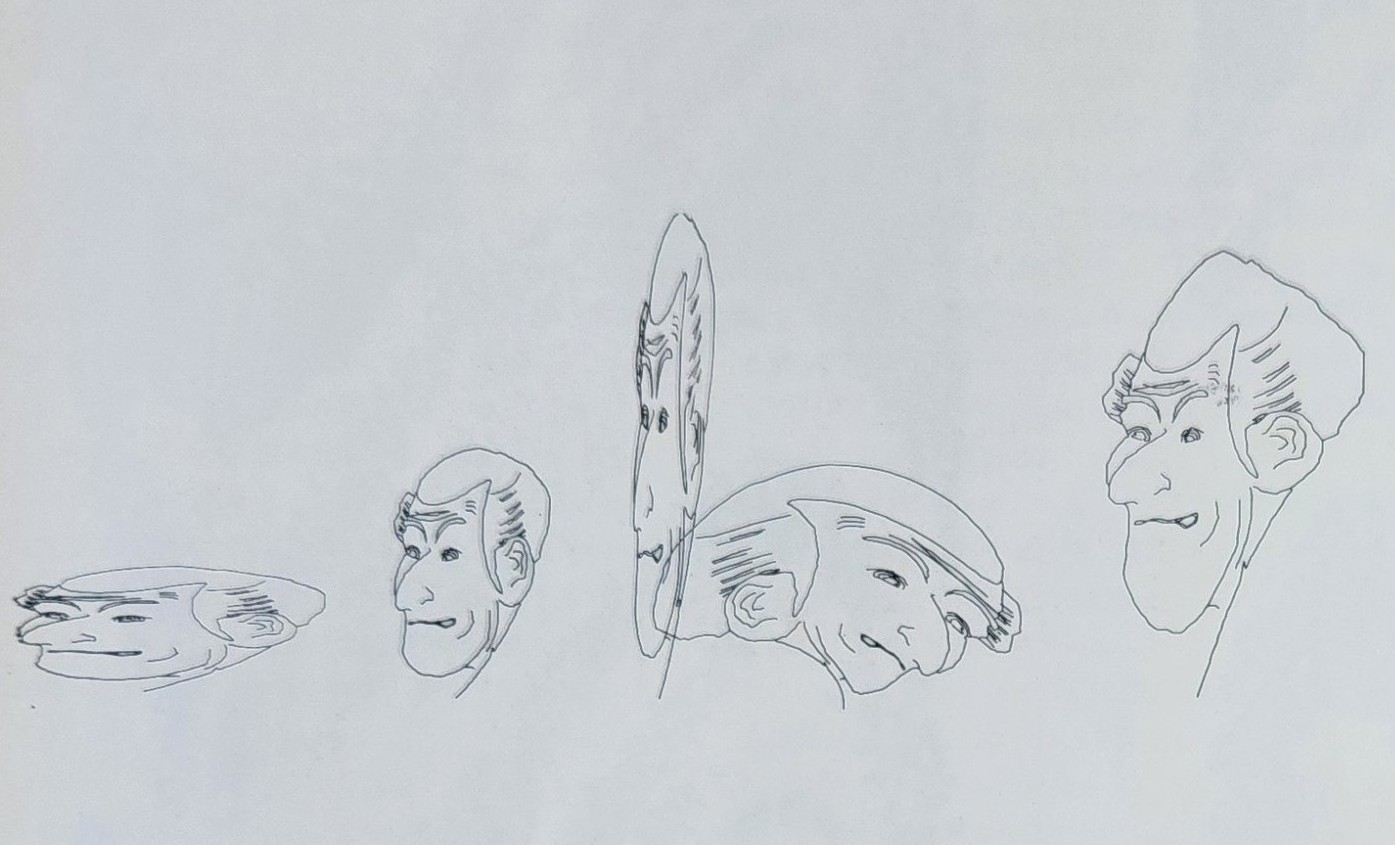
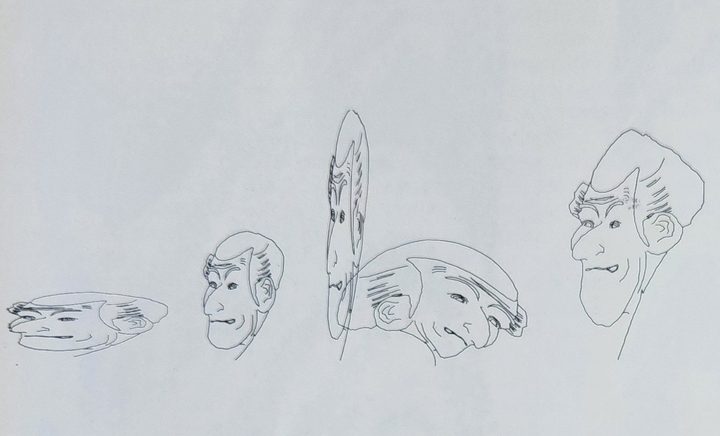
Deformation of Sharaku—five line drawings of a Sharaku actor's head, one at the original proportions and four transformed by coordinate exchange
Idea
Masao Kohmura
Data
Makoto Ohtake
Program
Koji Fujino
Shown
Cybernetic Serendipity, ICA, London, 1968 (cat. no. 11); Tokyo Gallery, 1968 (the panel); published in the Computers and Automation art contest, August 1968

The contour of an actor print by Tōshūsai Sharaku, Ichikawa Ebizō as Takemura Sadanoshin (1794), was digitized by hand to data points and put through a program that computed several coordinate transformations of the data. Five images are set side by side, each a different coordinate transformation of the data, including a conversion from Cartesian to polar coordinates and a transformation by a cubic equation.

According to Ōizumi, Yoshiaki Tono, Japanese commissioner for the Paris Biennale, said when he visited the group’s office in February 1969: “I never imagined that I would see Sharaku in London, of all places.”

No. E

APM No. 1 (Automatic Painting Machine No. 1) 1968

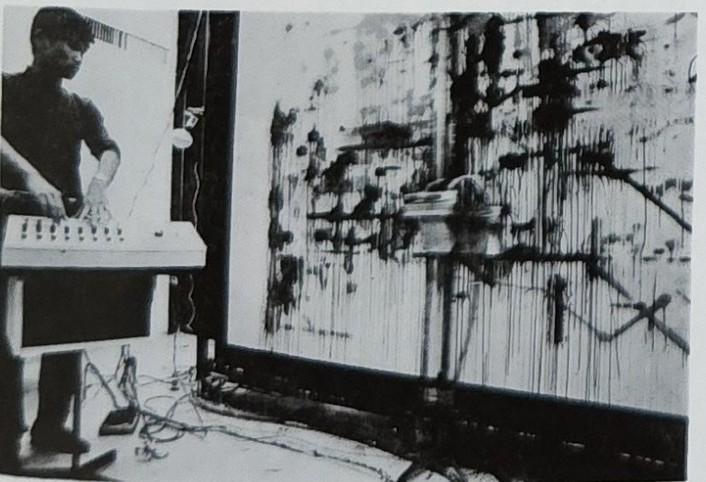
APM No. 1 at Tokyo Gallery, 1968: Kohmura at the control panel, the sprayed canvas behind him
Kohmura at the control panel of APM No. 1, Tokyo Gallery, September 1968. Reproduced from Graphic Design no. 33, 1969, p. 41.
Design
Haruki Tsuchiya, Jun’ichirō Kakizaki. Mechanism: Fujio Niwa, Kōji Fujino. Completed by the whole group
Form
Two-axis carriage carrying four spray guns over an upright canvas of about 2 × 2.5 m; self-built wired-logic control unit; eight sensor posts
Shown
Tokyo Gallery, September 1968; the control unit at Possible Futures, ICC Tokyo, 2005, and The National Art Center, Tokyo, 2007

Built for the group’s only solo exhibition, Tokyo Gallery in September 1968. APM No. 1 is an interactive sculpture designed to create live paintings based upon visitor movements. The work consists of four spray guns loaded with four colors of acrylic that ride along a rail carriage over a large upright canvas.

Eight posts (four emitters and four receivers) are set up, creating a “happening zone” on the gallery floor. Visitors break one of the beams to create the painting. When a beam is broken, either the carriage is moved or a paint valve is opened. A rotary switch on the controller is used to select the input for the machine: photocells, microphones set in the posts, punched paper tape, or panel buttons. Ōizumi calls APM No. 1 Japan’s first interactive installation and an early form of inkjet printer.

Sources for these entries

Kazufumi Ōizumi, The Genesis of Computer Art: The Trajectory and Thought of CTG 1966–1969 (NTT Publishing, 2015), chapters 2 and 4 and Appendices B and C; the Cybernetic Serendipity catalog (1968; this collection’s copy); Museum of Contemporary Art Tokyo collection records. Images are reproduced from period publications in this collection, cited in each caption.