Members メンバー
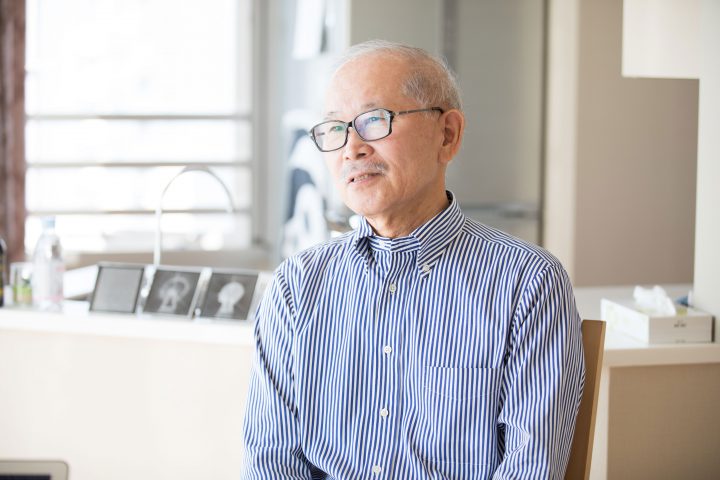
Haruki Tsuchiya 槌屋治紀
Haruki Tsuchiya (1943) grew up building radios and devouring detective novels, comfortable with both science and words. At the University of Tokyo he majored in mechanical engineering, interested in its breadth. As an unpaid instructor at the university’s Large-Scale Computer Center he taught himself FORTRAN in a week and gained free access to the computers. When his entry in IBM’s student essay competition earned an honorable mention, the prize resulted in the ability to use IBM Japan’s computers at no charge, making CTG’s art possible.
In December 1966 Tsuchiya co-founded the Computer Technique Group with Kohmura, Yamanaka, and Kakizaki, becoming the creator of its most purely algorithmic work. He was particularly drawn to the use of random numbers in artworks, which he found could produce effects akin to jazz ad lib and improvisation. He holds idea and program credits for Random Walk Kennedy, Kennedy in the Net, Monroe in the Net, Miracle Stones, and March of Polygons. He was also, by his own account, the CTG member who drove the group’s 1969 dissolution, believing CTG had shown everything the medium could then show.
After CTG, Tsuchiya finished his doctorate in 1970 and turned to a career in energy. He became one of Japan’s earliest advocates of renewable energy, co-translated Amory Lovins’s Soft Energy Paths in 1979, and founded the Research Institute for Systems Technology. He developed the concept of an “energy cultivation civilization,” contributed to the 1995 IPCC report, and was inducted into the Kyoto Earth Hall of Fame. An electronic book reader he designed in 1989 reached the market as NEC’s Digital Book in 1993.
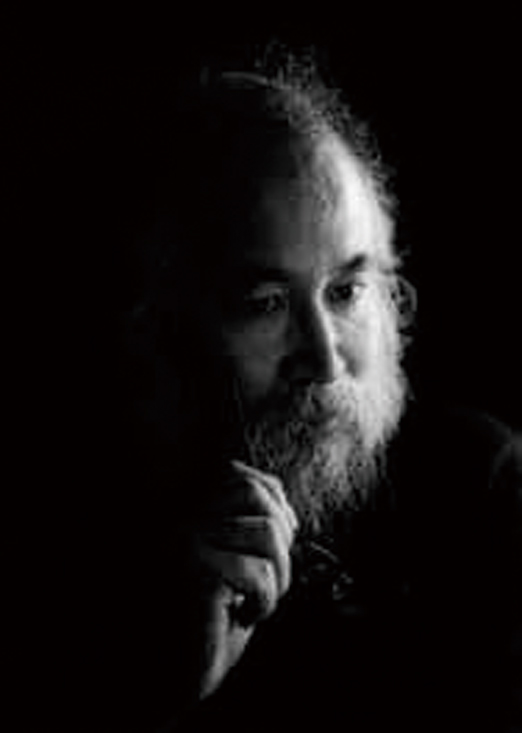
Masao Kohmura 幸村眞佐男
Masao Kohmura (1943) decided on an art career only after seriously weighing mathematics, astronomy, philosophy, and poetry as alternatives. He eventually settled on product design at Tama Art University, joined the literary club Gunchō, and studied under the painter Yoshishige Saitō, whose open seminar pushed him toward contemporary art. The move toward computer art came at a 1966 U.S. Trade Center exhibition in Tokyo, where a demonstration of a computer plotter convinced him that “the era of drafting by hand is over.”
Within CTG, Kohmura supplied the ideas for Return to a Square, Running Cola is Africa!, and Kennedy in a Rectangle, three of the group’s defining images. In a 1969 essay on Duchamp he set out the position that guided his work for the rest of his life: “art is the discovery of a system.”
Kohmura was the only member who continued as a practicing artist after the disbandment of CTG. After the group dissolved he kept plotting with Tsuchiya, traveled to the United States in 1972 at the State Department’s invitation, and co-organized Video Week at the American Center Tokyo. He showed work at the Sony Building’s International Computer Art Exhibitions from 1973 to 1975, presented a video work at the 1974 Tokyo Biennale, and mounted a solo exhibition, Sculpture of Civilization, in 1975.
From 1983 he pursued his signature project, the Non-Word Dictionary, computer-generated volumes exploring every possible character combination, which showed at the Venice Biennale’s TransCulture exhibition in 1995 and ICC’s Library of Babel in 1998. In 2013 he presented LIFE LOG, a twenty-seven-hour film assembled from three million photographs taken on daily walks.
Kohmura has taught at four universities and directed the Institute of Image Thought, successor to the Image Structure Laboratory he founded in 1969. In 2020 the Japan Media Arts Festival honored him with its Special Achievement Award.
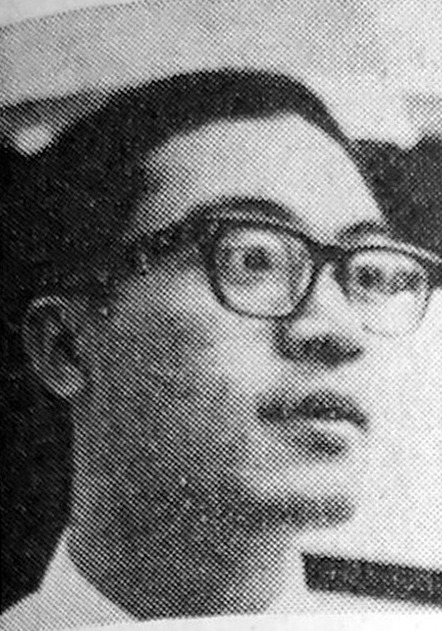
Kunio Yamanaka 山中邦夫
Kunio Yamanaka (1943) was born in Hitachi City. “By temperament I’m of the humanities type,” he once said, “but I like theory, things like mathematics.” It was the pursuit of what he called “beautiful theory” that led him to the aeronautics department of the University of Tokyo, where he worked on optimal control theory and served alongside Tsuchiya as an instructor at the Large-Scale Computer Center.
As a co-founder of CTG, Yamanaka wrote the programs for Return to a Square and Upheaval Collection. His code was central to the group’s idea that transformation itself could be art.
In April 1968, straight from his master’s degree, Yamanaka joined Hitachi, Ltd. and spent his career there designing control-computer systems for factory automation, rising to General Manager of the Industrial Equipment Division and directorships at Hitachi affiliates. In retirement he returned to his love of aeronautics, publishing a 2020 biography of his professor, The Airplane and the Intellectual Giant: A Critical Biography of Matao Sanuki.
Jun’ichirō Kakizaki 柿崎純一郎
Jun’ichirō Kakizaki (1942) studied electronic engineering at the University of Electro-Communications, writing his thesis on bandwidth compression, and joined Japan Business Automation in 1965, which made him the only CTG founder already in full-time employment.
He was Tsuchiya’s high-school classmate, and shared his obsession with building radios. Kakizaki handled CTG’s hardware, designing control circuitry for the group. After the group dissolved, he continued on that path, filing a patent in 1971 for a magnetic-tape control device that was, in essence, the same control-circuit engineering he had done for CTG.
Decades later, Kakizaki reverse-engineered the surviving controller of APM No. 1, the group’s automatic painting machine, so that its workings could be documented. Kakizaki has remained close to his alma mater: he led EATEC, the University of Electro-Communications’ entrepreneurs’ association, as its chairman.
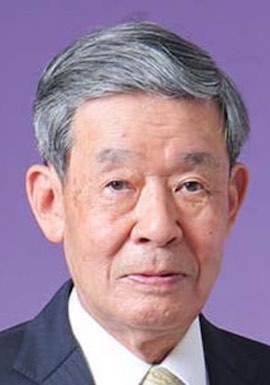
Kōji Fujino 藤野孝爾
Kōji Fujino (1942) was a student-council president and a natural organizer with a technical mind. He came to CTG from the Computer Based Art study group of the Watanabe laboratory at the University of Tokyo, where the philosopher Hiroshi Kawano, Japan’s first computer artist, singled out his programming as the work of a genius. As a researcher, Fujino implemented the Coons and Bézier free-form-surface papers (the mathematics that would later underpin CAD).
For CTG, Fujino wrote the program for Running Cola is Africa!, the interpolation engine behind the group’s famous work, in which a running man transforms into a Coca-Cola bottle and then into the continent of Africa.
In 1968 Fujino joined Mitsubishi Heavy Industries and spent seventeen years commercializing his research theme, pioneering in-house CAD/CAM for the free-form surfaces of car bodies. He rose through Mitsubishi Motors’ overseas production engineering to senior positions in its European operations, retired in 2004, and has since run his own executive-search firm.
Fujio Niwa 丹羽冨士雄
Fujio Niwa (1942) was recruited into CTG by Fujino from the Watanabe laboratory where he was a doctoral student in mechanical engineering and an instructor at the Large-Scale Computer Center.
From early on he was the group’s internal skeptic, asking the question: “Can this really be called art?”
He was also one of the group’s most productive members. Niwa carries sole idea-and-program credit for Shot Kennedy No. 1 and No. 2 and wrote the program for Kennedy in a Rectangle. With Fujino he designed and built the mechanism of APM No. 1, the automatic painting machine that became Japan’s first interactive cybernetic art installation.
After CTG, Niwa left art to study science. He took a research fellowship at the Studiengruppe für Systemforschung in Heidelberg from 1970 to 1975, where he earned a doctorate in economics and social sciences. He became an associate professor at the University of Tsukuba, served as research director at Japan’s National Institute of Science and Technology Policy, and was a professor at the National Graduate Institute for Policy Studies from its founding in 1997 until 2008. He is now professor emeritus.
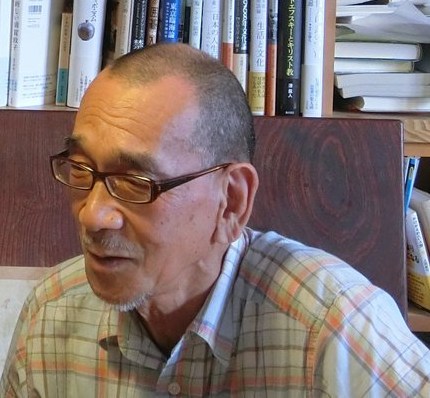
Makoto Ohtake 大竹誠
Makoto Ohtake (1944) came to CTG from Musashino Art University, where he studied crafts and then architecture. He joined the student-movement “Revolutionary Designers’ League” as a self-described member of the “body faction.”
When Ohtake applied for a student directorship, he answered his exam questions with a blank sheet of paper inviting the examiners to attend his happening at the Shinjuku Pit Inn. He was rejected. But Tsuchiya heard the story and was intrigued and sought out Ohtake and brought him into the group.
Ohtake became CTG’s contrarian and author of the “ningputer” theory: the more the computer matters, the more the human matters. With Kohmura he prepared the coordinate data for Running Cola is Africa!, the painstaking hand-digitization that made the group’s famous transformation possible.
He later founded the Lost Property Research Institute, a street-observation group, and became a critic of architecture, design, and the city, writing books on subjects from bathhouse murals of Mt. Fuji to urban texture. From 1992 to 2009 he was a professor of design at Tokyo Zokei University.
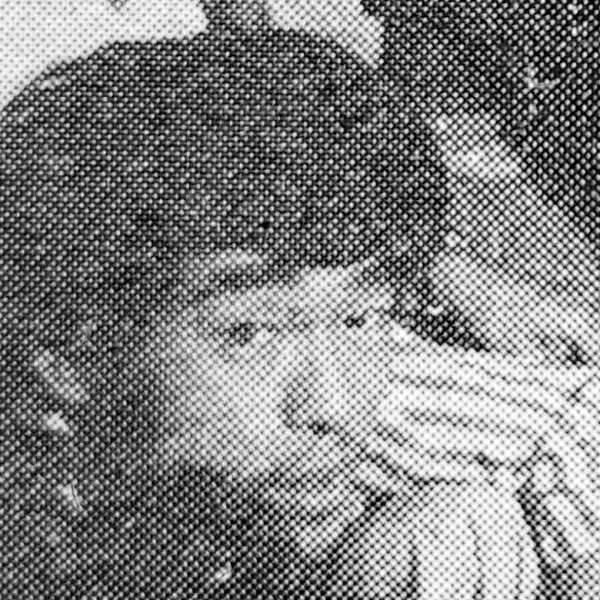
Takeshi Hasegawa 長谷川武
Takeshi Hasegawa (1943) was the group’s psychologist. He was a Kyoto University behaviorist who studied how humans learn to recognize figures, working with neuron-signal data. With no computer available to him at Kyoto University, he learned FORTRAN on trips to Tokyo, on NHK’s IBM 7090, and like Tsuchiya he earned an honorable mention in IBM’s student essay competition.
Within CTG, Hasegawa programmed computer-graphic works of distinctive character and, together with Niwa, kept the group honest by constantly questioning the purpose of its works. During his CTG years he published a research abstract on the psychology of learning and an article on creativity in the computer age in the magazine Computopia in 1969.
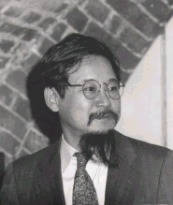
Shigeaki Iwashita 岩下繁昭
Shigeaki Iwashita (1946) was a graduate student of “systematic design” in architecture at Musashi Institute of Technology, part of the era’s movement to replace intuition with method. He joined CTG through a chance meeting when he happened to sit next to Kohmura and they started a conversation about books that ended up running through the night.
Iwashita brought two important skills to the group: experience programming FORTRAN for plotters, and camera experience producing 16mm teaching films. Both skills helped in making CTG’s computer films, Computer Movie No. 1 and No. 2, possible.
He went on to become a housing-production researcher of international range: Doctor of Engineering, licensed architect, CEO of his own consultancy, visiting researcher at the University of Sussex’s Science Policy Research Unit, and vice-president of an Oregon housing exporter. From 2001 he was a professor and founding department head at the Institute of Technologists (Monotsukuri University).
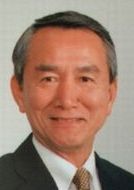
Michio Sasaki 佐々木三知夫
Michio Sasaki (1946) brought to the group a wide variety of interests. He was a Waseda University commerce student, Dixieland jazz trumpeter, wrestler, one-time secretary to a member of the Diet, and organizer of the 1967 Japan Student Cuba Friendship Inspection Delegation. He met Tsuchiya at a party of the Japan–Cuba Cultural Exchange Institute. By his own account he knew little about computers but was drawn by the company he would keep.
Sasaki joined in December 1968, as the group entered its most demanding year, and supplied the labor and organization CTG needed as it shipped exhibitions around the world.
In 1971 he returned to his native Akita for a thirty-five-year career in the prefectural government, followed by a busy retirement as a community organizer of regional newsletters, a music museum, memorial monuments, and international aid projects.
Sources for these profiles
Biographical detail is drawn from Chapter 1 of the Oizumi monograph unless noted. Tsuchiya: Japanese Wikipedia; the Research Institute for Systems Technology site (systemken.com), including its CTG history. Kohmura: ICC archive participant record; the artist’s own sites (kohmura.org, n-mark.com); for the seventies, his printed biography and statements in Arts on Computer (O Art Museum, 1987; this collection’s copy), the Tobunken exhibition index (Tamura Gallery, 1975), the catalogs of the 11th Japan International Art Exhibition (Tokyo Biennale, 1974) and Japanese Culture: The Fifty Postwar Years (1995; both this collection’s copies), Fujiko Nakaya’s first-person history of early Japanese video (Video Week, 1972), and the Computopia citations of the 1972–74 Mao works in the monograph’s references. Yamanaka: the author profile of his Hikōki to chi no kyojin (Bandaiho Shobo, 2020); CiNii records of his Hitachi Review papers, 1973–85. Kakizaki: J-PlatPat patent gazette JP S47-033604 (filed March 1971; gazette pages archived with this collection); the Oizumi monograph’s acknowledgments and Appendix C; birth year from Bijutsu Techō no. 304 (November 1968). Fujino: his own CV at Office Fujino (officefujino.com); birth year from Bijutsu Techō no. 304. Niwa: GRIPS faculty pages (Japanese and English); CiNii; birth year from Bijutsu Techō no. 304. Ohtake: Japanese Wikipedia; publisher records. Hasegawa: the Oizumi monograph’s acknowledgments; birth year from Bijutsu Techō no. 304, confirming the 6th Paris Biennale catalog (1969). Iwashita: National Diet Library and library name-authority records; CiNii; KAKEN. Sasaki: his own site, donpu.jp (profile and memoir).