The Art of CTG CTGの芸術
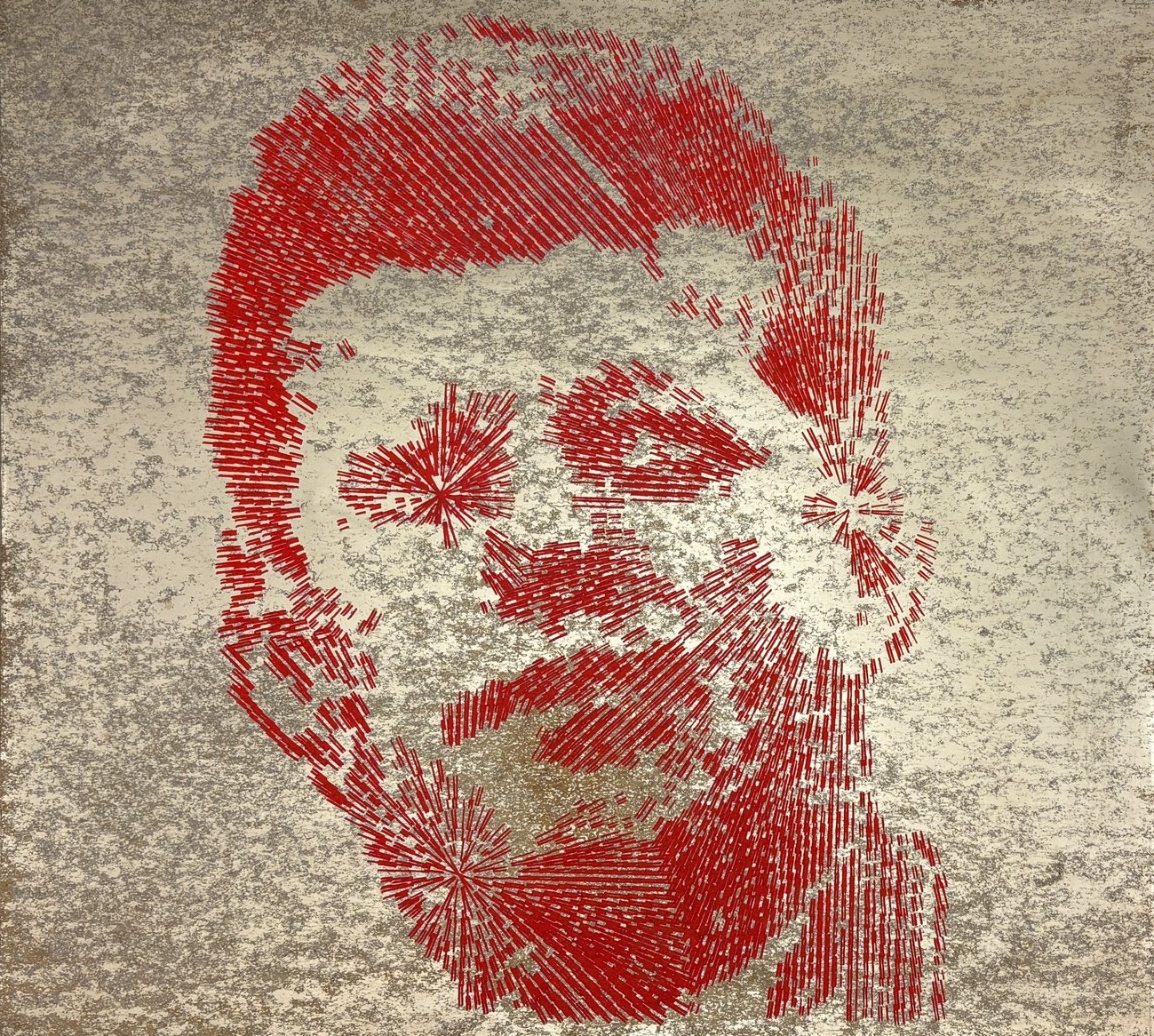
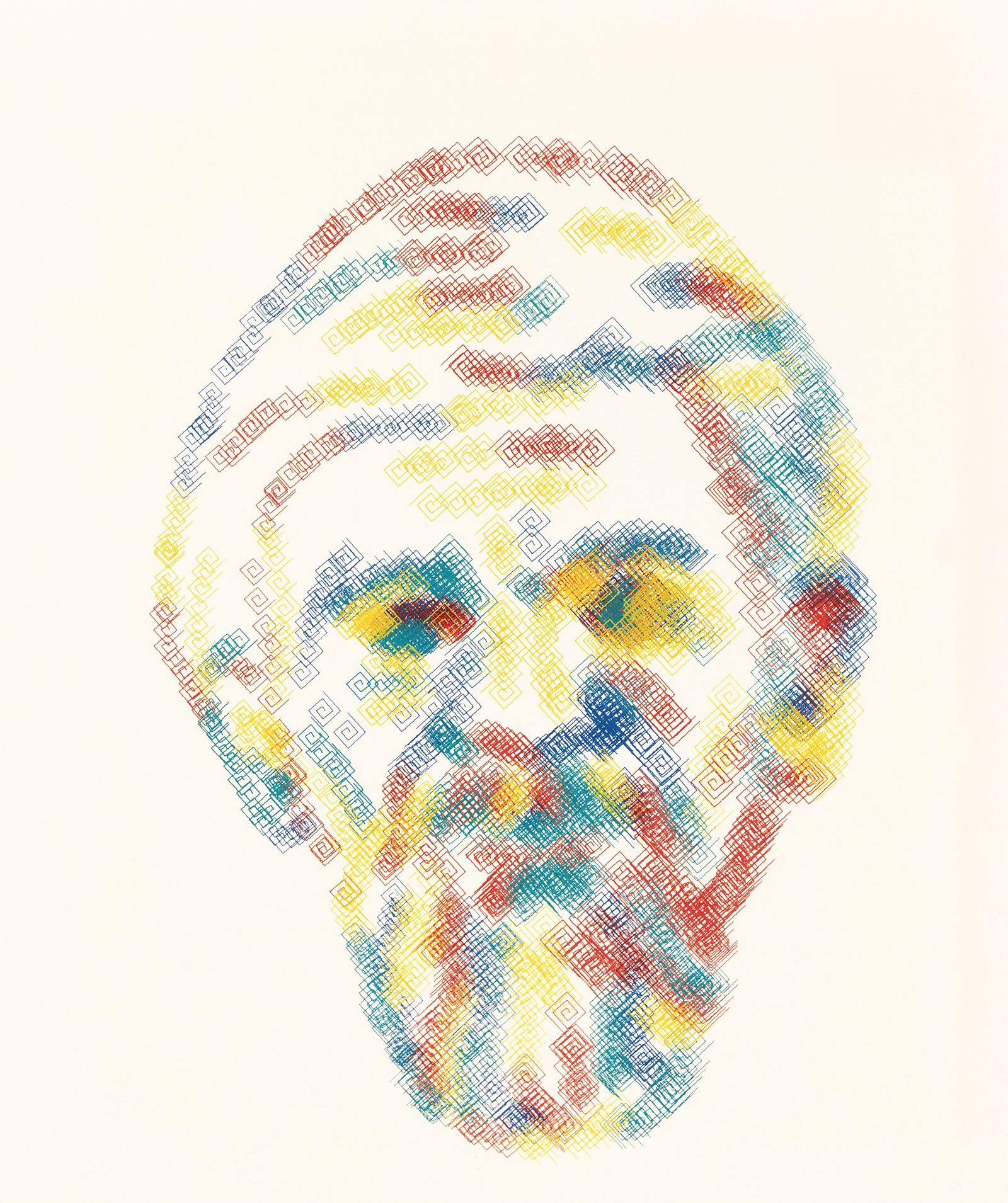
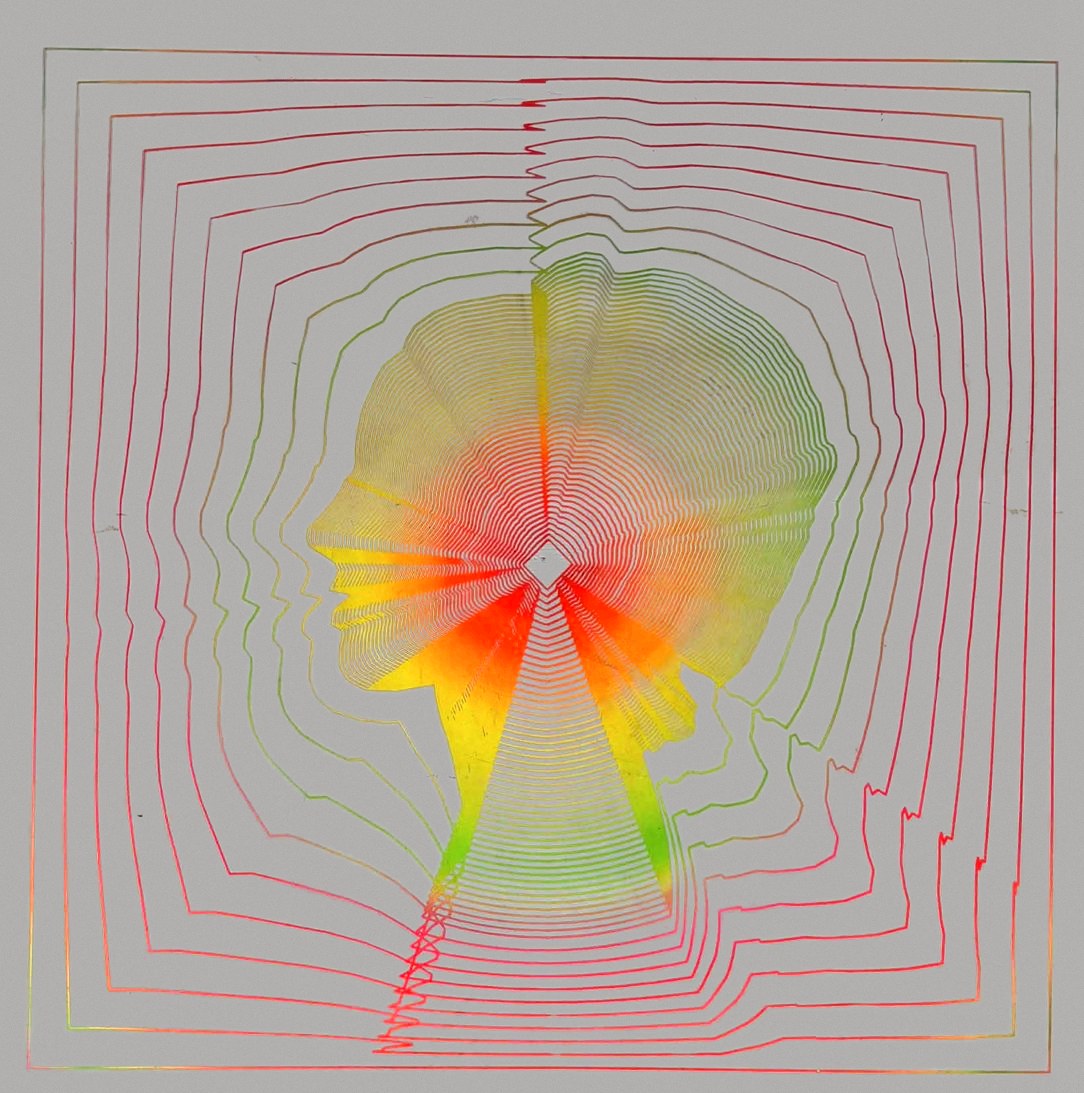
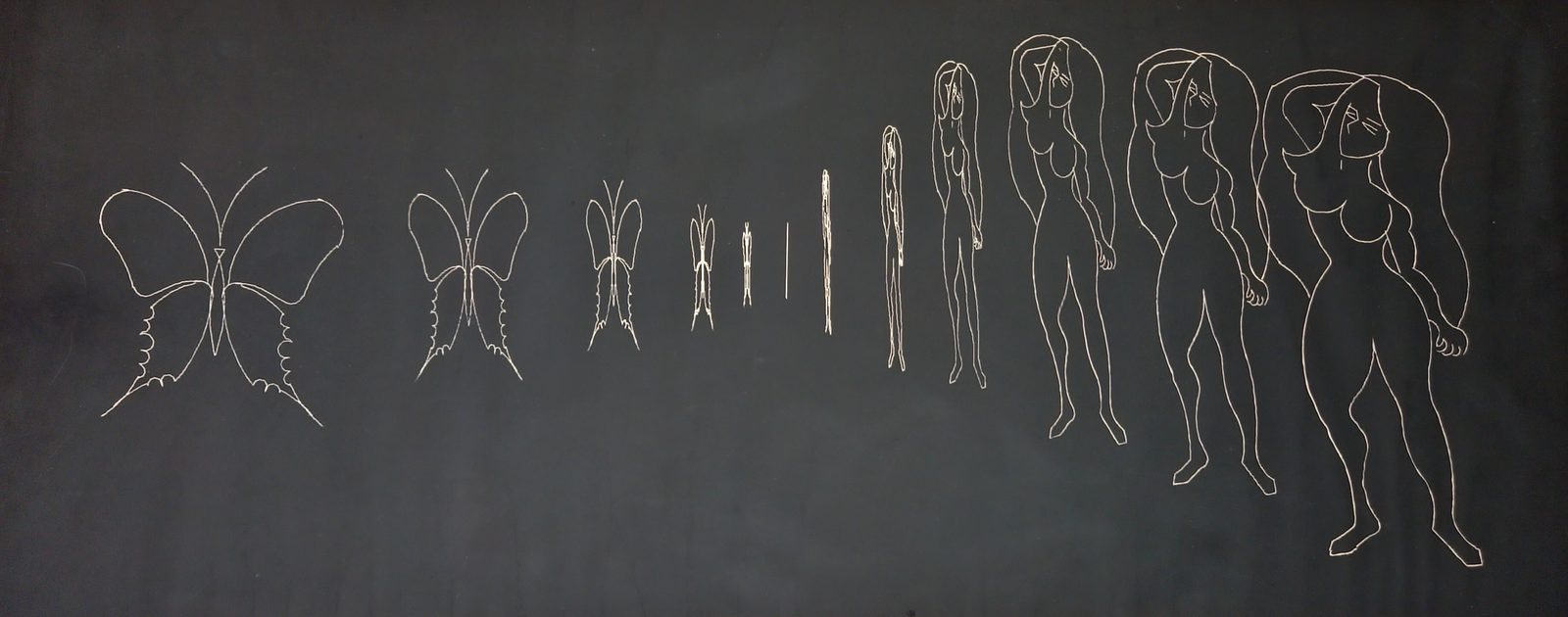
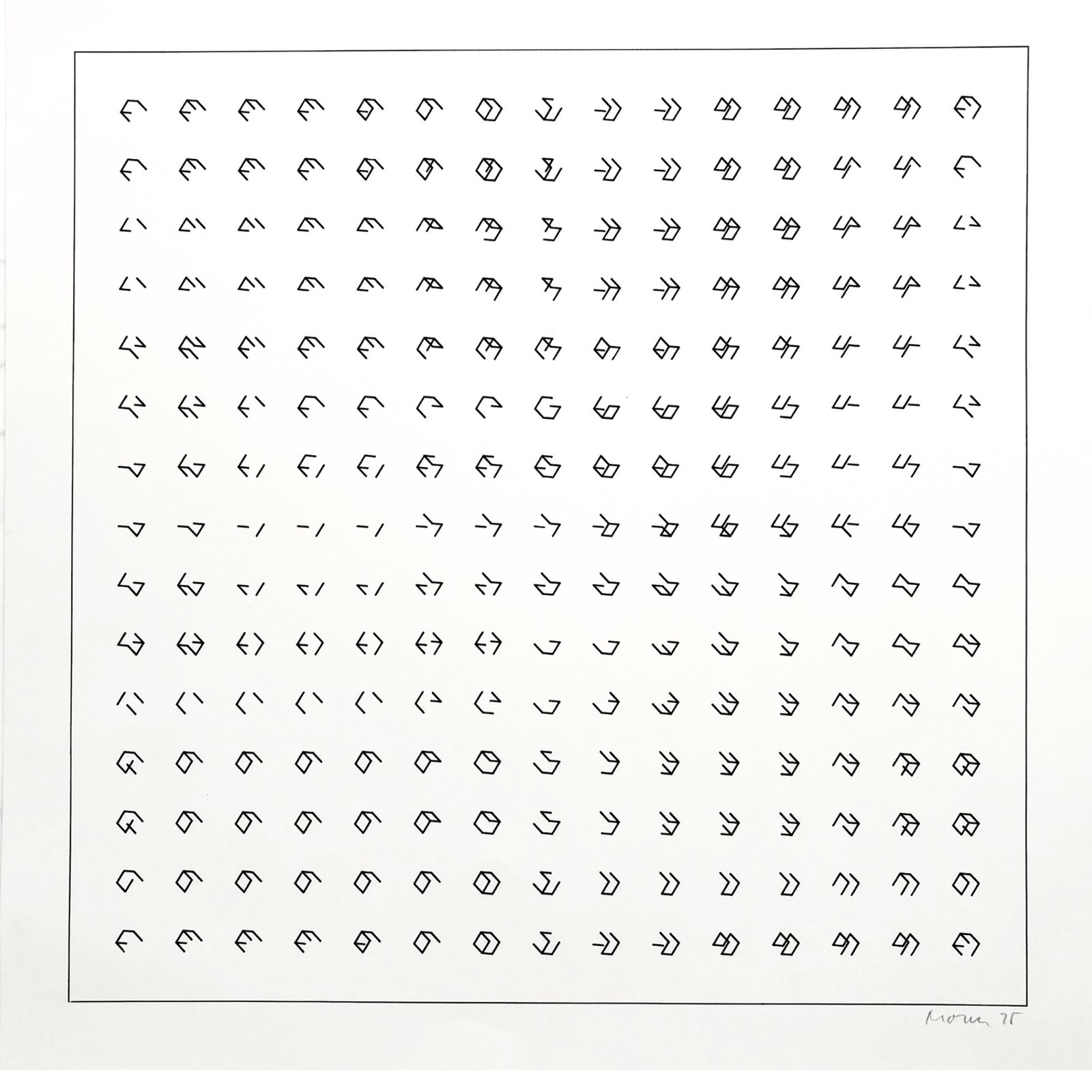
CTG’s graphics can be divided into three categories: deformations, metamorphoses, and generative compositions. Each section below shows a category definition, a working demonstration of the technique, a CTG work from this collection, and a counterpart from the collection’s wider holdings.
Deformations
A photograph is scanned into the computer and distorted by program.
Metamorphoses
A program computes intermediate steps between shapes.
Generative Compositions
A program establishes basic rules of a composition (how many elements, the space they may occupy, etc.), then uses random numbers to decide the rest (shape, size, placement, etc.).

Sources for this section
The three categories consolidate the four groupings of the Cybernetic Serendipity catalog (1968; this collection’s copy), following the method descriptions in CTG’s own period articles and in Kazufumi Oizumi, The Genesis of Computer Art (NTT Publishing, 2015). The definitions draw on the catalog’s work notes. The spacing analyses the demonstrations implement—the equal and quadratic interpolation of Return to a Square—follow the monograph’s fourth chapter, Oizumi’s reconstruction of algorithms whose original programs do not survive. Works from the collection’s wider holdings are documented from the objects themselves.