Timeline 年譜
The birth of computer art
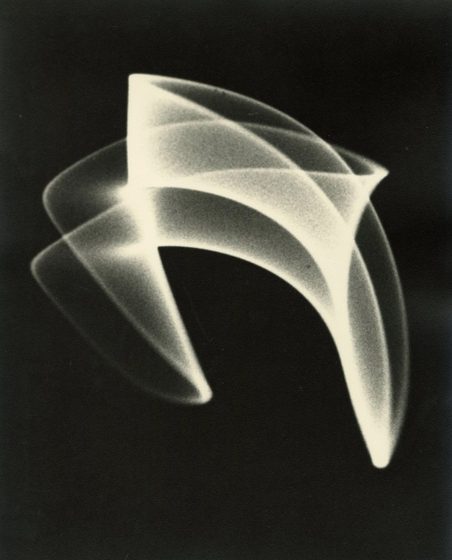
Ben Laposky exhibits his oscillons, photographs of patterns traced on an oscilloscope screen, at the Sanford Museum in Cherokee, Iowa. It is the first exhibition of electronic art, and considered the birth of computer art.
The IBM 7090
IBM delivers the first 7090 mainframes, its first large computer built from transistors rather than vacuum tubes, at $2.9 million each.
Whitney’s first computer film
In Los Angeles, John Whitney completes Catalog, a reel of moving patterns made with an analog computer assembled from surplus anti-aircraft gun directors. Whitney’s Experiments in Motion Graphics later shows at CTG’s farewell screening at Iwanami Hall in January 1970.
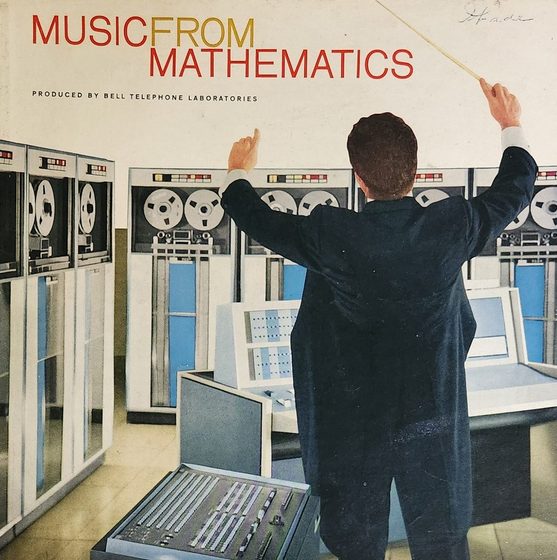
Music from Mathematics
Bell Telephone Laboratories issues Music from Mathematics as a promotional box set, the first publicly released recording of a computer making music: eleven pieces, nearly all made on an IBM 7090, the same model CTG will program at IBM Tokyo.
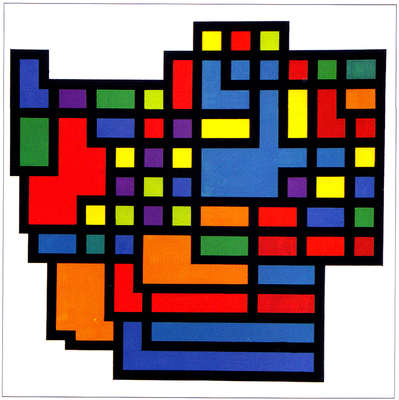
Japan’s first computer images
Philosopher and aesthetician Hiroshi Kawano publishes Japan’s first computer-generated images using Markov-chain patterns. CTG and Kawano will cross paths often. When CTG stages its 1967 symposium, Kawano is on the panel. And it’s Kawano who calls out Fujino’s programming as the work of a genius.
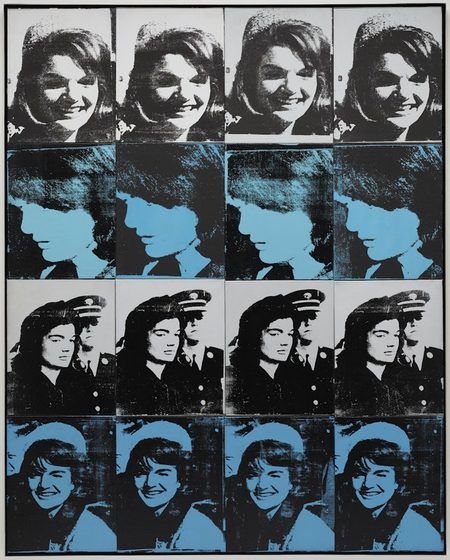
Warhol’s Jackies
Andy Warhol silkscreens press photographs of Jacqueline Kennedy from the assassination and funeral in repeated grids.
Digital computer art on exhibition
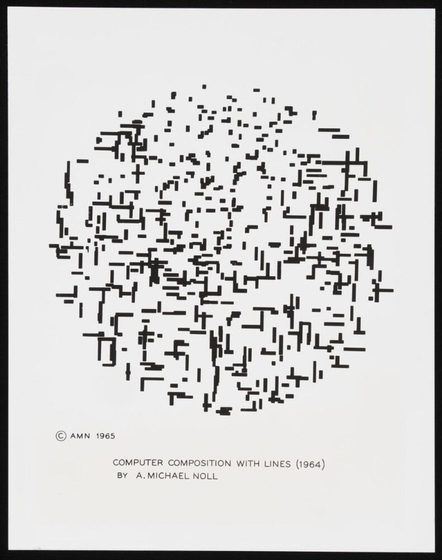
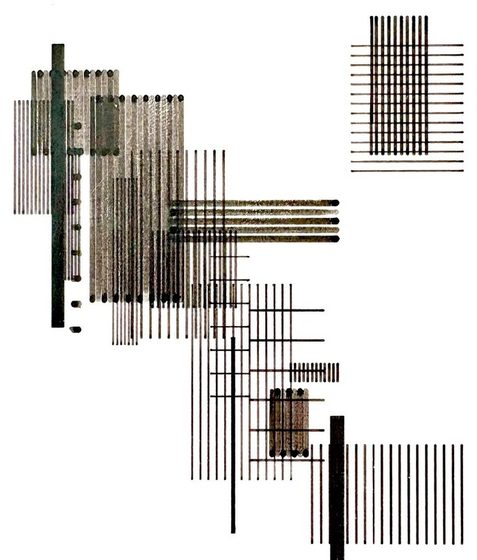
The first exhibitions of digital computer graphics open: Georg Nees in Stuttgart in February, A. Michael Noll and Béla Julesz at the Howard Wise Gallery in New York in April, and Frieder Nake with Nees in Stuttgart in November.
US combat troops land in Vietnam
The first American combat troops arrive in South Vietnam. In Tokyo, writers and intellectuals launch Beheiren, a movement against the war.
CTG is founded in Tokyo
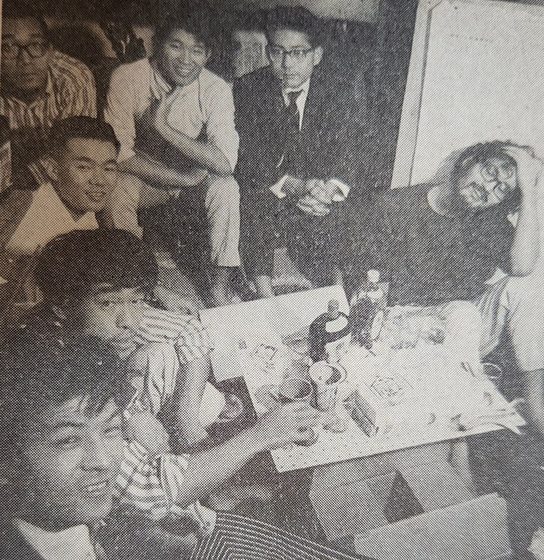
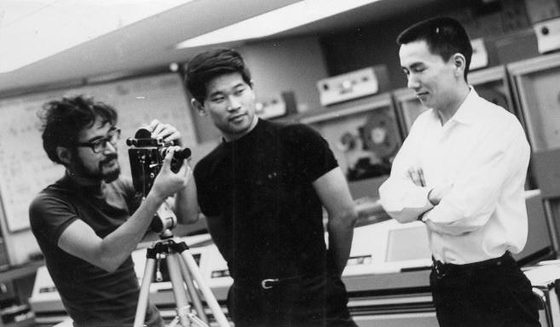
Haruki Tsuchiya and Masao Kohmura form the Computer Technique Group with Kunio Yamanaka and Jun’ichirō Kakizaki, and issue a manifesto: “We simply choose neither praising machine civilization nor cursing it.”
CTG gets free IBM computer time
The IBM essay competition Tsuchiya and Kohmura entered in 1966 pays off. After the May awards ceremony an IBM director lends the group an account at the Scientific Data Center in Tokyo. This gives the group free time on an IBM 7090 mainframe with a CalComp 563 drum plotter.
CTG grows
Kōji Fujino, Fujio Niwa, and Makoto Ohtake join the group. Hasegawa follows in 1968, then Iwashita and Sasaki. The group has ten members by the end of 1968.
First works and commissions
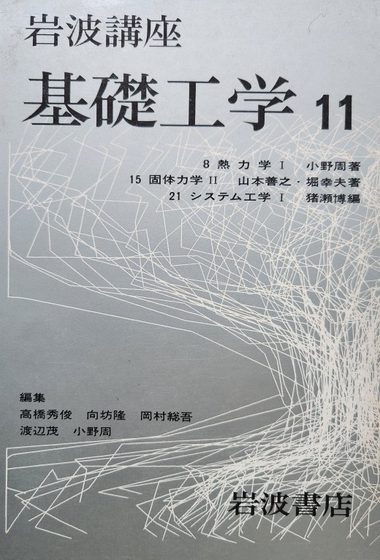
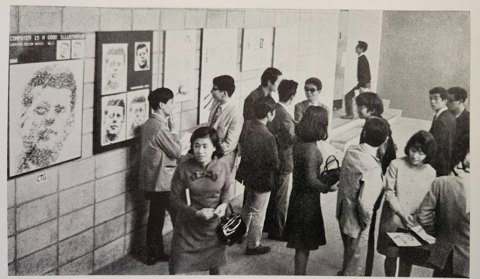
The group submits the Computer Design Series to the Nissenbi open call. Iwanami commissions cover designs for its 19-volume engineering lecture series.
CTG’s symposium
The group stages its symposium, “The Electronic Computer and Art,” in the Tama Art University auditorium.
The Ken Knowlton nude
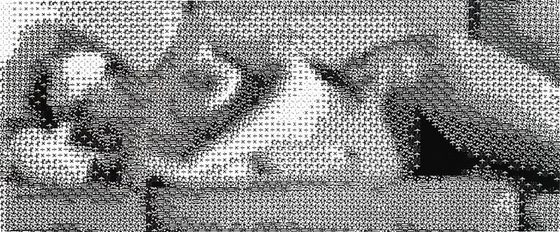
Leon Harmon and Ken Knowlton’s Studies in Perception I, a photograph of the dancer Deborah Hay rebuilt from tiny printer symbols, appears in the New York Times.
Jasia Reichardt sees CTG in Tokyo
Through the painter Yoshishige Saitō, the London curator visits Tokyo Gallery and encounters the group’s work.
Csuri’s Random War
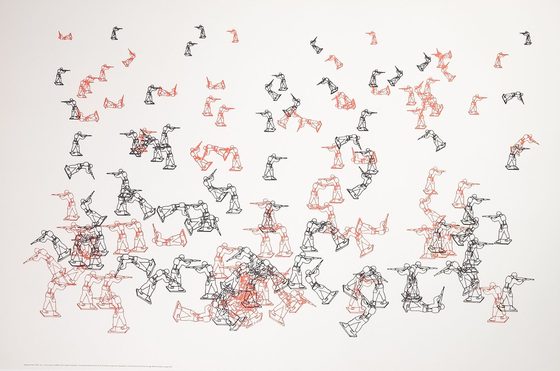
As the Vietnam War escalates, Charles Csuri and programmer James Shaffer at Ohio State University create Random War: a work consisting of a battlefield of toy soldiers, each with the name of a real person, where a random-number program decides who dies, who is wounded, and who survives. It’s shown alongside CTG’s work at Cybernetic Serendipity.
Japan overtakes West Germany
Japan’s gross national product passes West Germany’s and becomes the second largest in the non-communist world.
The Kennedy series grows
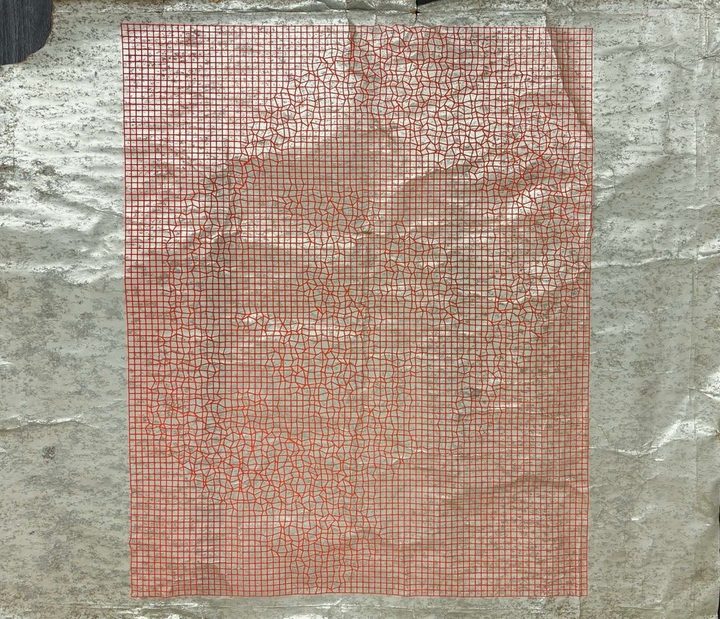
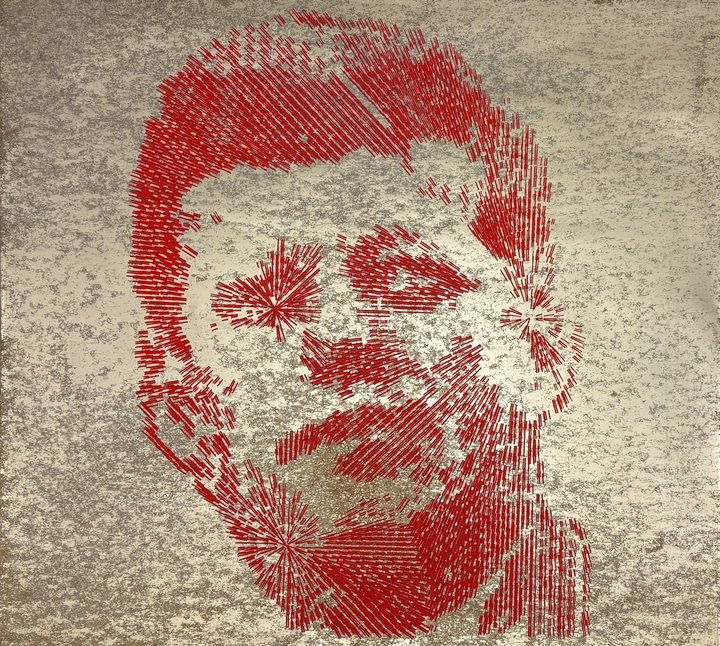
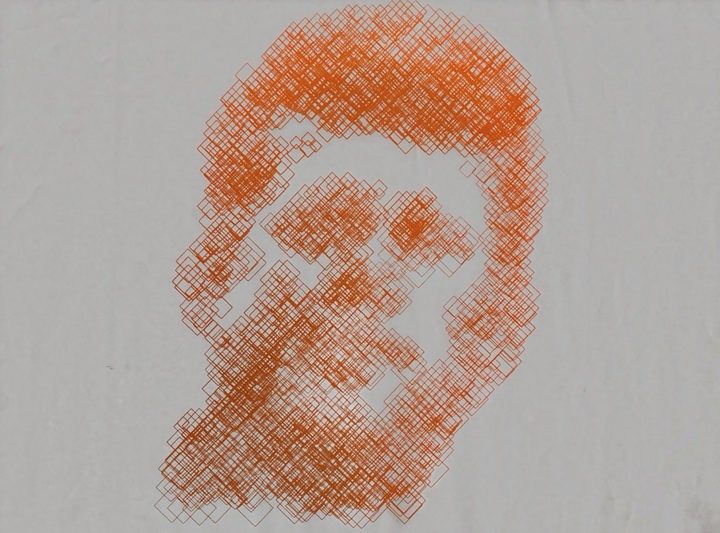
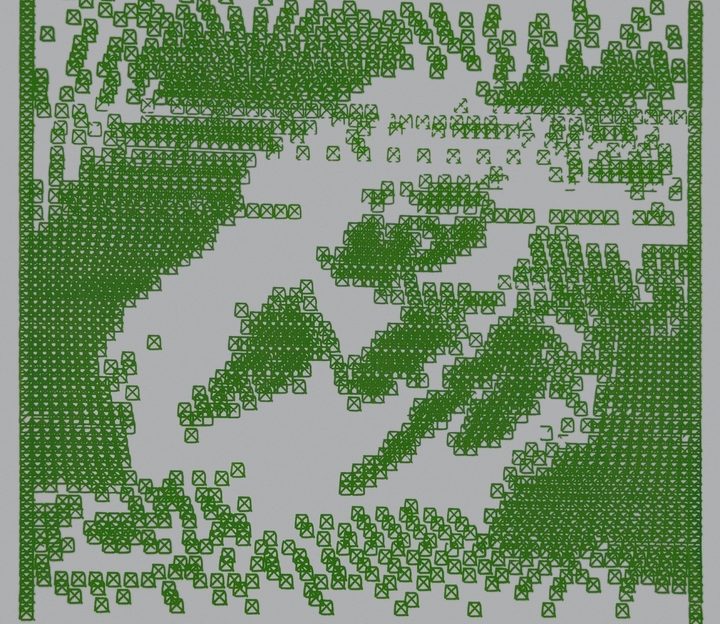
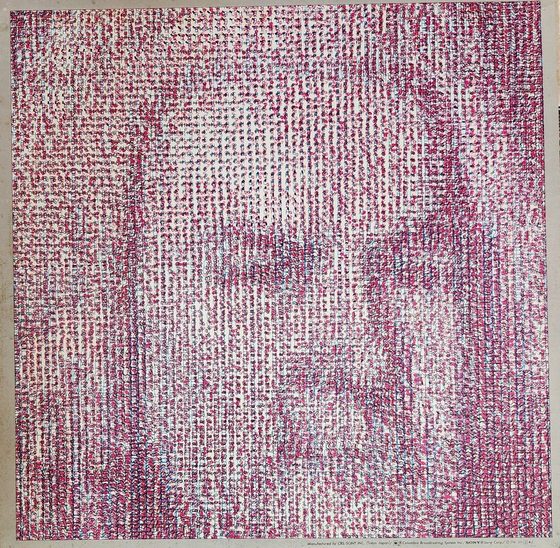
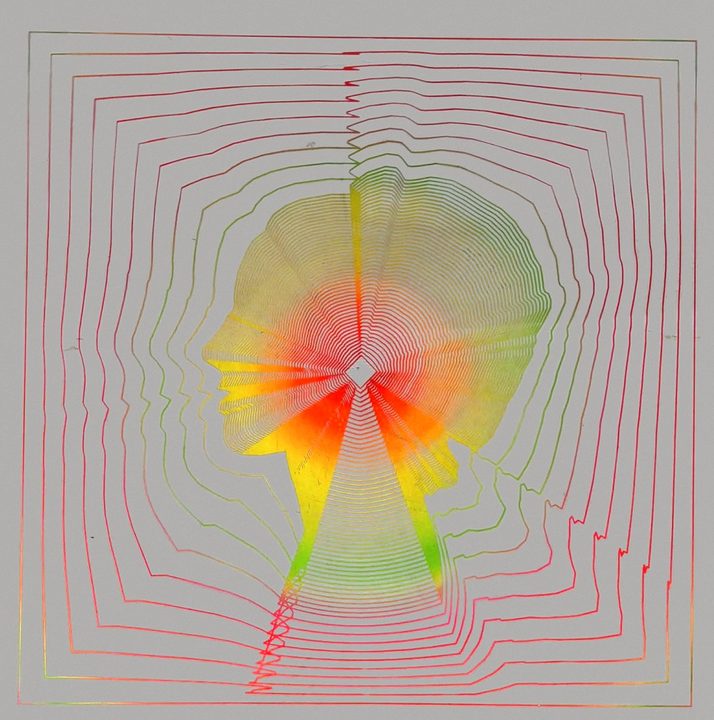
The Kennedy dataset, digitized by hand the previous summer, is used to create programmed deformations (nets, rectangles, cubes, etc.) in FORTRAN IV on the IBM 7090.
Tsuchiya on NHK
Tsuchiya sits on a televised panel about information and art with Shigeru Watanabe and the critic Yūsuke Nakahara, two months before CTG’s first exhibition.
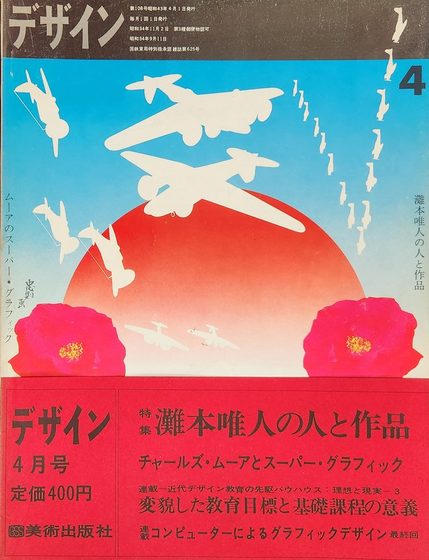
CTG in print
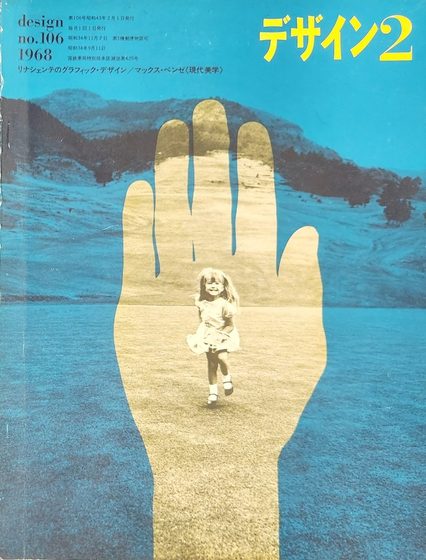
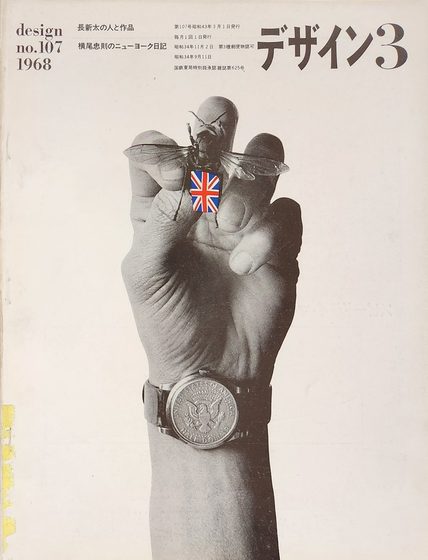
A three-part serial in the design monthly lays out CTG’s concepts and methods.
Japan’s first computer-art exhibition
CTG shows alongside Hiroshi Kawano and SARASVATI at the 1st Computer Art Contest in Tokyo.
2001 shows in Tokyo
The movie 2001: A Space Odyssey opens in Japan.
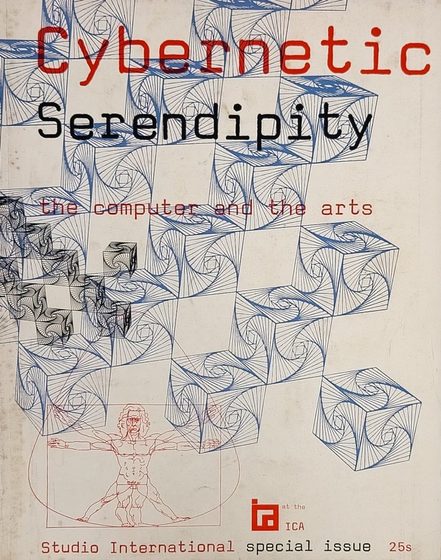
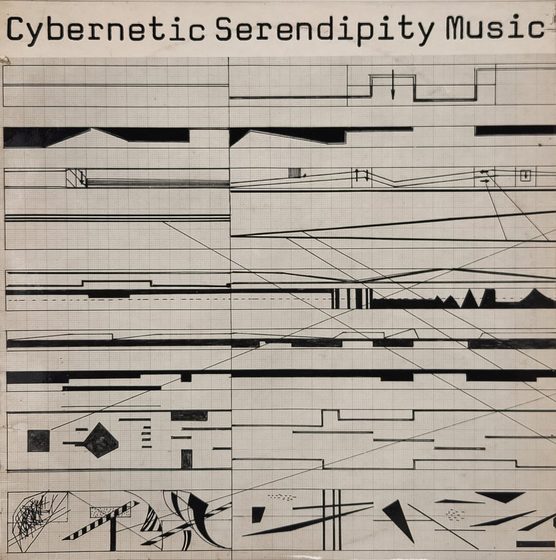
Cybernetic Serendipity opens in London
The ICA’s survey of art and the computer includes 26 CTG works, 24 of them original plotter drawings. Time magazine reproduces Niwa’s Shot Kennedy No. 1. Motif Editions publishes lithographs sold to the show’s tens of thousands of visitors. Seven CTG works are selected for that year’s Computers and Automation contest issue.
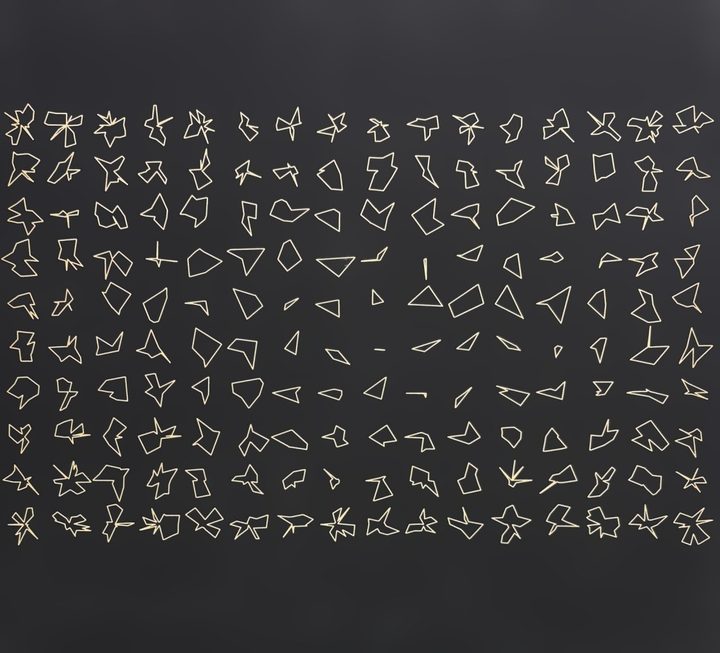
CTG in the national museum
The 6th Trends in Contemporary Art at the National Museum of Modern Art, Kyoto, shows “Masao Kohmura (C.T.G.), Do You Know Kennedy?”
The Tokyo Gallery solo show
“Media Transformation through Electronics,” the group’s first and only solo exhibition, is held. APM No. 1, an interactive painting machine with light and sound sensors, debuts as Japan’s first interactive cybernetic art installation.
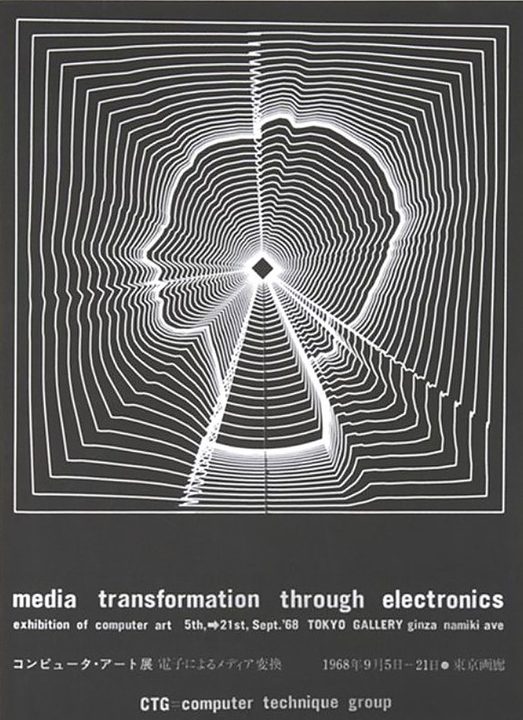
Mechanical Design at the Toppan Building
The printer’s gallery shows CTG works presented as the future of graphic-design equipment. In November, Bijutsu Techō profiles the group as “the computer guerrillas.”
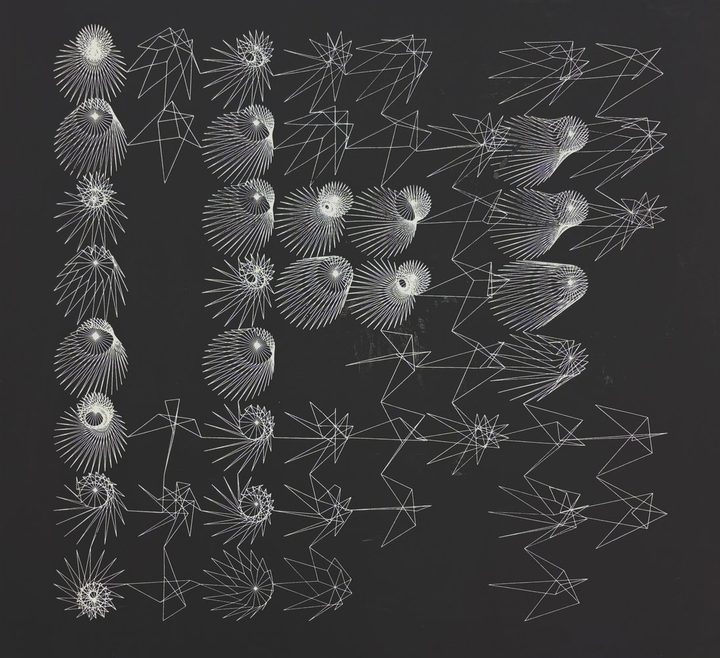
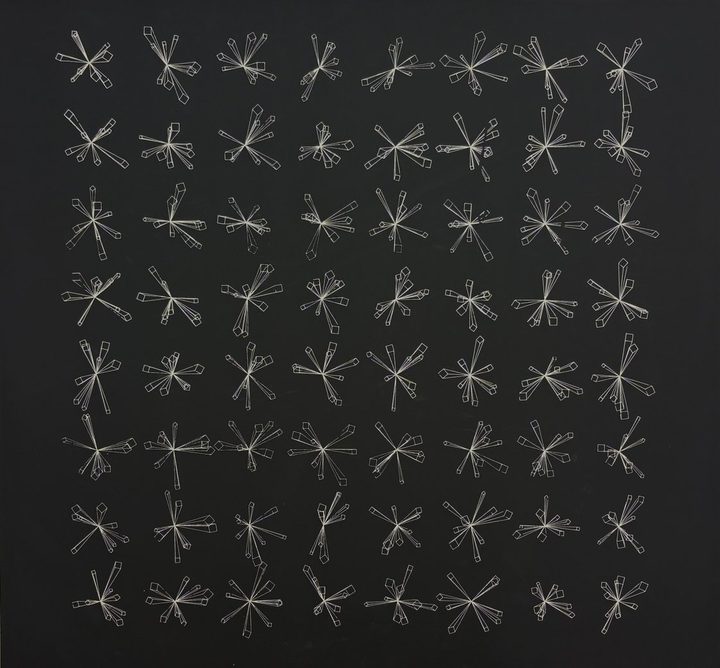
The first monograph of computer art
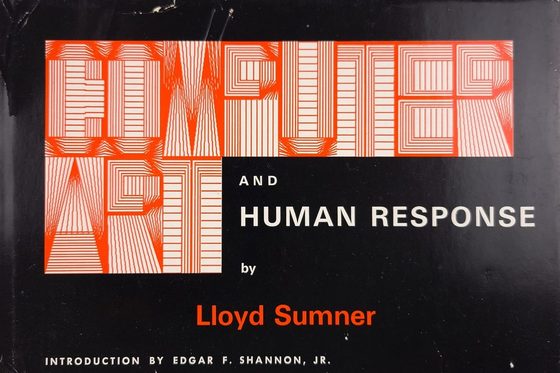
In Charlottesville, Virginia, Lloyd Sumner publishes Computer Art and Human Response, the first monograph of computer art.
Student protests
Riot police clear students occupying the University of Tokyo’s Yasuda Auditorium after a two-day siege. CTG’s members are graduate students and instructors at the university.
Glusberg visits Tokyo
Jorge Glusberg visits Japan and meets CTG. Twenty CTG works travel back with him and are shown in South America.
Zagreb invitation
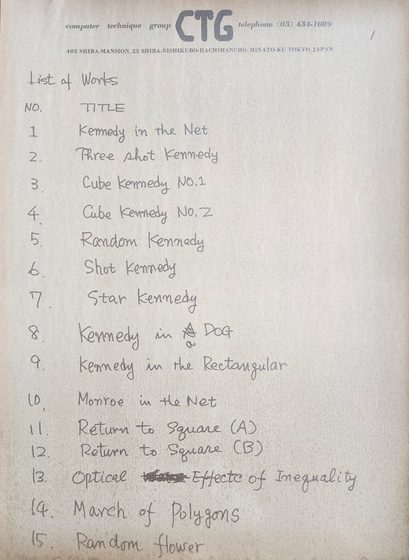
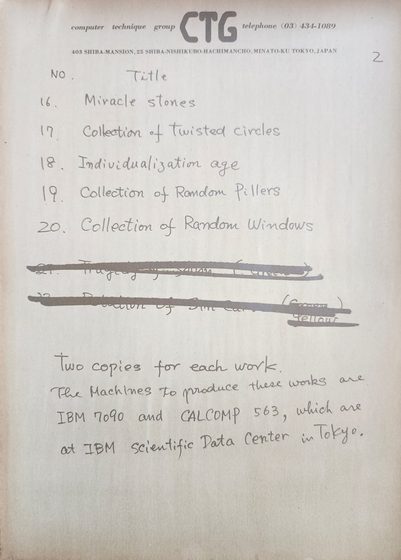
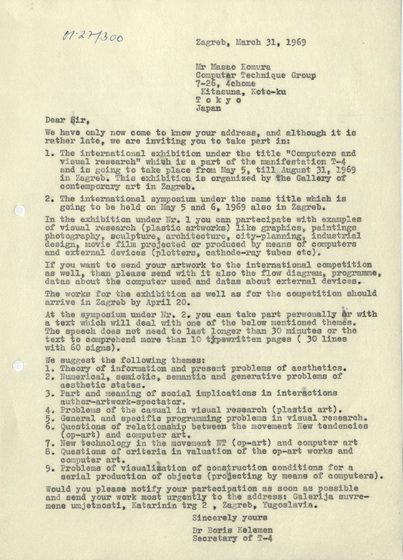
Dr. Boris Kelemen, secretary of Zagreb’s Tendencije 4, types seven individual letters inviting CTG into “Computers and Visual Research,” the exhibition of the New Tendencies. But works are due in Zagreb by April 20, just three weeks away, so nothing is sent. All seven letters are under Resources.
Electromagica ’69
At the Sony Building, Ginza, CTG shows the installations Thermo Field and Plotting Field. Catalog →

Apollo 11
Neil Armstrong steps onto the Moon on the morning of July 21, Tokyo time.
Argentina’s first computer art show
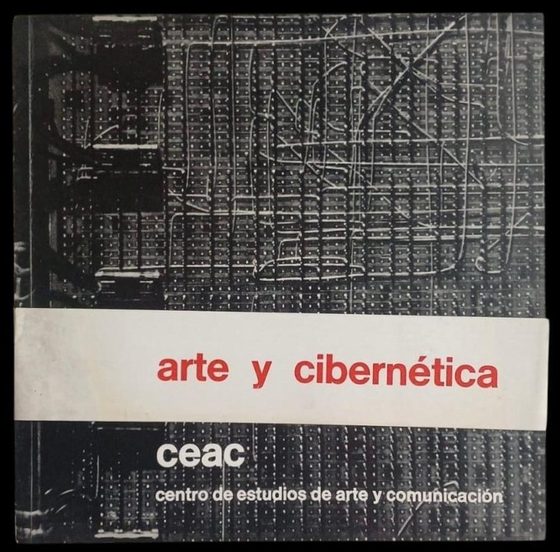
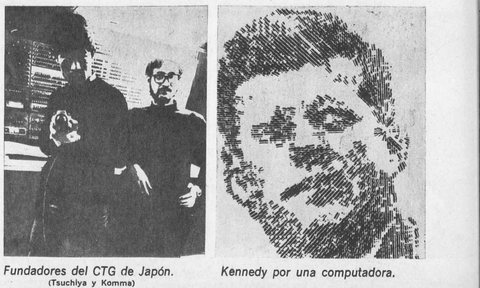
Arte y Cibernética opens at Galería Bonino on August 18. Twenty CTG works anchor the first computer-art exhibition in Argentina. Three weeks earlier the newsweekly Primera Plana announces the show with a photograph of Tsuchiya and Kohmura captioned “founders of the CTG of Japan” beside a Shot Kennedy; the government shuts the magazine down days later.
Dissolution
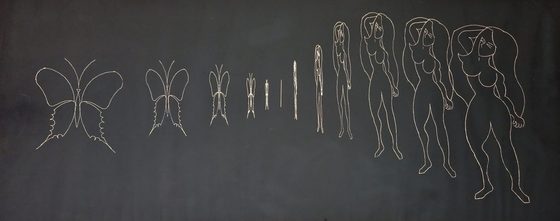
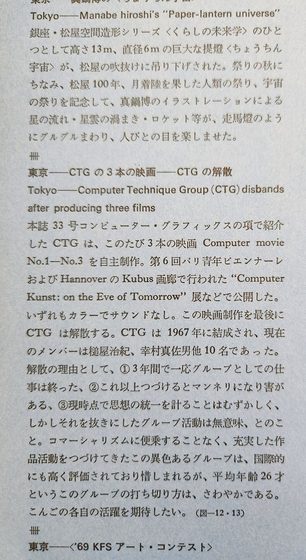
Immediately after shipping the works for its final two exhibitions, the group formally dissolves, announcing it with the student movement’s word kaitai, dismantling, rather than disbandment.
Paris
The 6th Paris Biennale opens at the Musée d’Art Moderne de la Ville de Paris with CTG’s three plotter panels, Computer Graphics No. 1 (Monroe), No. 2 (Kennedy and Monroe) and No. 3 (Multi Shots Kennedy).
CTG’s final exhibition
Computer-Kunst: On the Eve of Tomorrow at Cubus, Hannover opens with eighteen CTG works.

The first ARPANET message
A computer at UCLA sends the first message over ARPANET.
“eve of mass computication”
A farewell evening of computer films at Iwanami Hall, Tokyo. In “Good-bye, Computer art!” Tsuchiya declares that computer art “has become a thing of the past for me.”
Expo ’70 opens in Osaka
Japan’s world’s fair opens.
Venice Biennale
Eight months after the group dissolved, the 35th Venice Biennale’s experimental section lists CTG beside Franke, Nake and Nees.
Twenty works tour in South America
The Buenos Aires tour moves to Córdoba, Santa Fe, Lima, and more.
Bit Music plays in Buenos Aires
Glusberg’s updated exhibition, retitled Arte y Cibernética: San Francisco – Londres – Buenos Aires, opens with a cybernetic-music program that includes Tsuchiya’s Bit Music.
The pop-culture afterlife
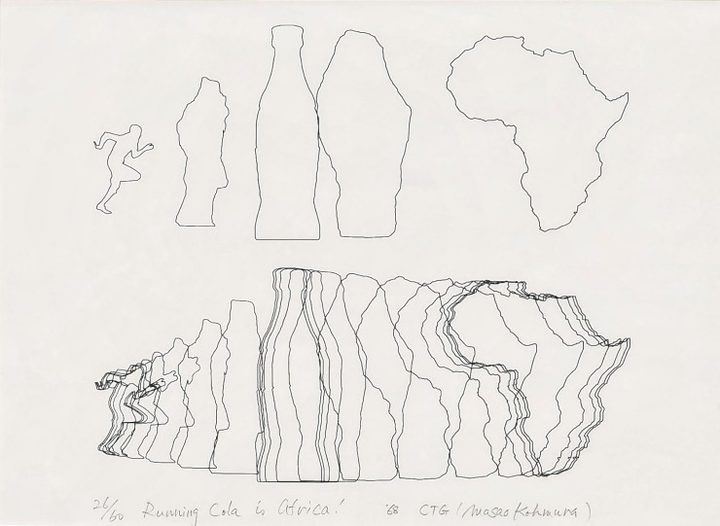
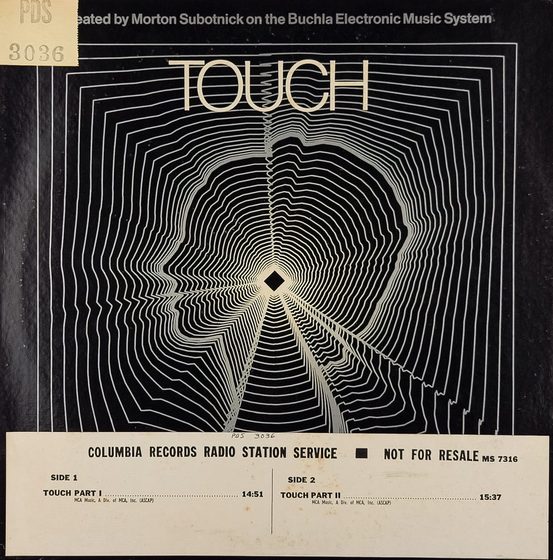
CTG’s images continue to be popular. Plot Bach on the reverse jacket of the Switched-On Bach LP (1968); Return to a Square as the cover art of Morton Subotnick’s Touch; Running Cola is Africa! in the Spring 1969 Whole Earth Catalog and the 1971 Last Whole Earth Catalog.
The IMPULSE tour
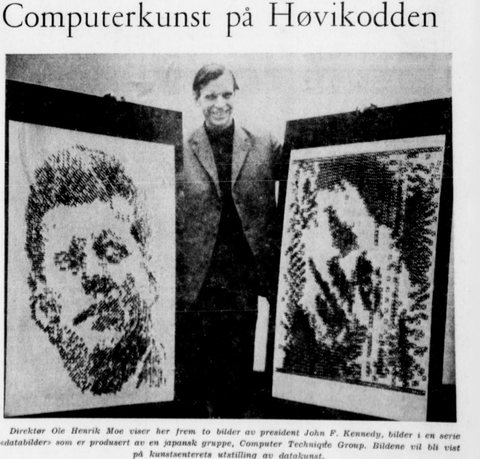
Hannover becomes IMPULSE computerkunst, a Goethe-Institut traveling exhibition circulating reproductions of CTG’s silkscreens, reaching New Delhi by 1972, where the catalog lists CTG’s sheets as “Artists Not Known.” In Oslo in January 1971 the director of the Henie Onstad Kunstsenter poses for the local paper between two CTG Kennedy panels.
The members start careers
The members disperse into energy research, the auto industry, academia and civil service. Minami Gallery, which had bought the bulk of the silkscreens, closes in 1979 and its stock never resurfaces.
Nake quits
In the Computer Arts Society’s bulletin PAGE, Frieder Nake publishes “There Should Be No Computer Art,” saying that he has quit making computer art and that the work served the computer industry more than art. Tsuchiya had done the same two years earlier, with his “indescribable sense of guilt.”
Cohen begins AARON
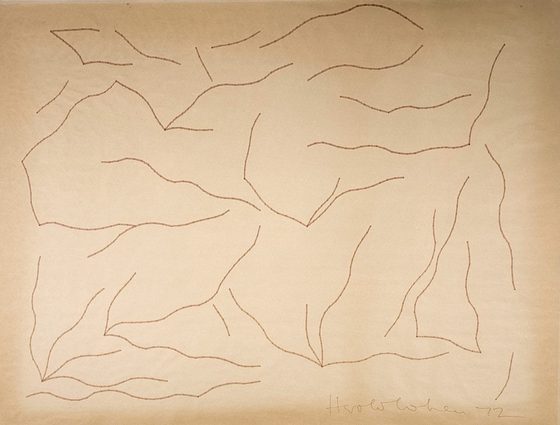
Harold Cohen, the British painter who had represented his country at the Venice Biennale in 1966, starts writing AARON at Stanford’s artificial-intelligence laboratory: a program that draws, and later paints, on its own.
The Paris Peace Accords
The Paris Peace Accords are signed, and the last American combat troops leave Vietnam.
The artists’ book
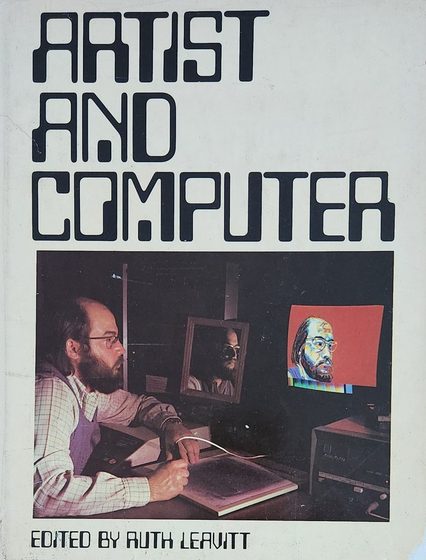
Ruth Leavitt’s book Artist and Computer gathers first-person statements from the field’s leading practitioners, the first book of its kind. CTG, dissolved six years earlier, is not among them.
The personal computer era
Computers arrive in artists’ homes with the release of the Apple II in 1977 and the IBM PC in 1981. The mainframe, and the after-hours plotter rooms that CTG’s art depended on, are no longer needed.
The Web
Tim Berners-Lee’s WorldWideWeb goes public in August 1991.
CTG’s quiet period
Running Cola is Africa! is shown at SIGGRAPH’s 1986 retrospective; three of the 1968 silkscreens—Kennedy in the Net, Return to a Square (b), Running Cola is Africa!—in the O Art Museum’s inaugural survey Arts on Computer (Tokyo, 1987); Kennedy in a Dog in Bonn in 2000; and in 2020, Japan’s Media Arts Festival gives Kohmura its Special Achievement Award.
Rediscovery at the ICC
Possible Futures: Japanese Postwar Art and Technology at NTT’s InterCommunication Center stages CTG’s rediscovery. It is the first full ensemble of the group’s objects in a gallery since the tour years.
The iPhone
Apple releases the iPhone.
The renaissance of CTG
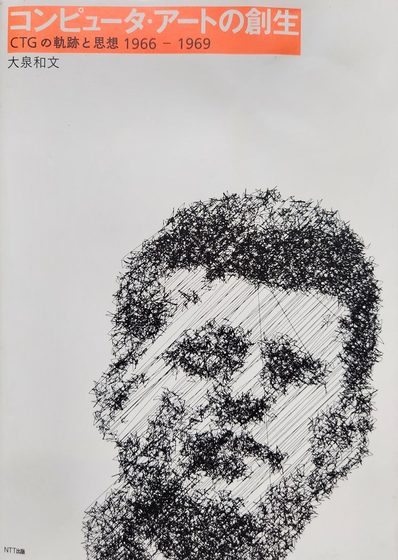
Kazufumi Oizumi publishes the definitive CTG monograph, built from the group’s primary documents and member interviews. He reconstructs the lost algorithms in modern code. In 2016 the members make him a member of the group.
CTG back in London
Whitechapel Gallery’s Electronic Superhighway includes Computer Movie No. 2 in its half-century survey of art and networks.
Into a Japanese museum
The Museum of Contemporary Art Tokyo accessions twelve CTG works given by Kazufumi Oizumi—silkscreens of the Kennedy series and Return to a Square, the Tokyo Gallery poster, two IBM Computer Design Series posters, a Running Cola is Africa! silkscreen, and the 16mm reel of Computer Movie No. 2. MOT collection →
Coded at LACMA
The Los Angeles County Museum of Art opens Coded: Art Enters the Computer Age, 1952–1982, a survey of seventy-five artists and the first large American museum account of the field in decades. CTG is included, alongside Kawano, Laposky, Nake, Noll, Cohen and Whitney.
Back on museum walls
MOMAK’s 60th-anniversary Re: Startline restages the Trends series; Cube Kennedy hangs in the recreated 1968 section. Tate Modern’s Electric Dreams (2024–25) tells the Arte y Cibernética story in its survey of art and technology, showing the 1969 Bonino exhibition poster.
Sources for this timeline
The timeline builds on Kazufumi Oizumi, The Genesis of Computer Art (NTT Publishing, 2015) and its 2026 errata, extended by this collection’s research: correspondence with Oizumi and Megumi Matsuo (2026), period press and catalogs in the collection, and archival records located 2026—the Tobunken exhibition index, Japan’s Media Arts Database, the Museum of Contemporary Art Zagreb’s digitized archive, the Otto Beckmann archive, and the Computer Arts Society’s PAGE bulletins.